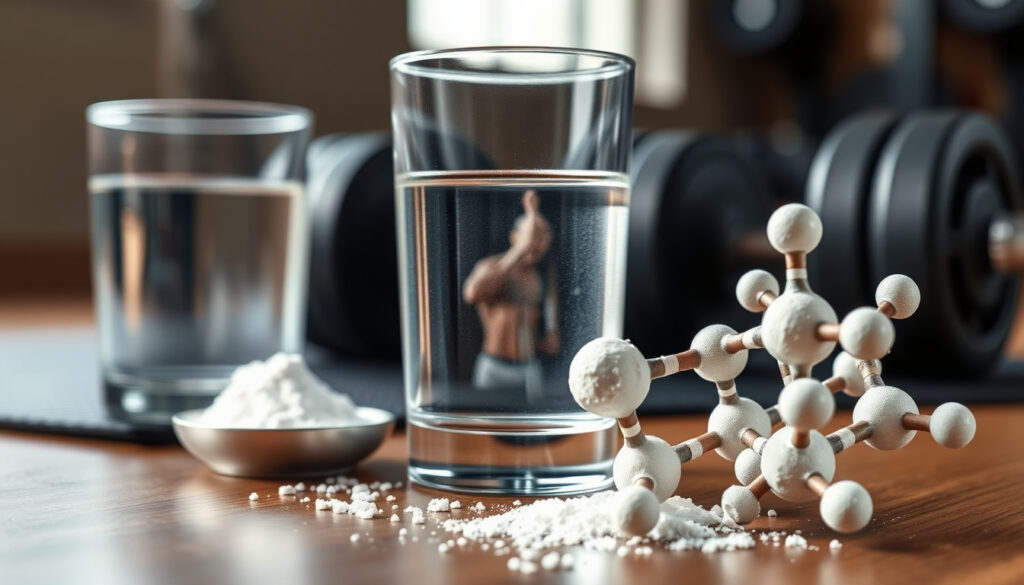
What is creatine? Benefits, side effects, and how it works
You’ve seen the tubs at the gym and heard athletes swear by it—but creatine is more than a performance powder. It’s a compound your body naturally makes and one of the most researched supplements in sports science.
Creatine stored in muscles: About 91% of the body’s creatine is found in skeletal muscle. ·
Natural production: The liver, kidneys, and pancreas produce about 1–2 grams of creatine per day. ·
Supplement effectiveness: Oral creatine supplementation can increase muscle creatine stores by 20–40%. ·
Average daily dose: A typical maintenance dose is 3–5 grams per day.
Quick snapshot
- Creatine is not a steroid (Cleveland Clinic)
- Daily 3–5 g supplementation is safe for healthy adults (GoodRx)
- Increases muscle performance in high-intensity exercise (Baylor Scott & White Health)
- Whether creatine improves cognitive function in healthy individuals (Baylor Scott & White Health)
- Long-term effects in adolescents and pregnant women (Cleveland Clinic)
- Creatine has been studied since the 1990s for athletic performance (GoodRx)
- Ongoing research into neuroprotection and cognitive decline (Baylor Scott & White Health)
- Female-specific dosing guidelines and long-term safety trials (Baylor Scott & White Health)
- More clinical data on creatine for bone health and heart failure (Baylor Scott & White Health)
Five key facts about creatine, one pattern: it’s a well-characterized compound with consistent effects on short-burst power, but many claims about broader benefits still lack high-confidence support.
| Attribute | Value |
|---|---|
| Chemical name | Beta-guanylhydantoin (2-(carbamimidoyl-methyl-amino)acetic acid) |
| Daily production | 1–2 g endogenously (Baylor Scott & White Health) |
| Total body store | 120–140 g (approx. 91% in muscle) |
| Half-life in blood | ~3 hours |
| Typical supplementation dose | 3–5 g/day |
| Diet contribution | About half of body’s creatine comes from diet (Baylor Scott & White Health) |
| Supplement increase in muscle stores | 20–40% (GoodRx) |
| Primary storage site | Skeletal muscle (approx. 91%) |
What exactly does creatine do to your body?
How creatine produces energy
- Creatine donates a phosphate group to ADP to regenerate ATP, the body’s main energy currency for short, intense efforts (Cleveland Clinic)
- This ATP recycling system is especially active during activities that last 5–15 seconds, like a heavy squat or a 100-meter sprint.
Where creatine is stored in the body
- Approximately 91% of creatine resides in skeletal muscle as phosphocreatine (Baylor Scott & White Health)
- Small amounts are stored in the brain, heart, and other tissues.
Role in high-intensity exercise
- Higher phosphocreatine stores allow muscles to work harder and recover faster between sets (GoodRx)
- Studies consistently show improvements in sprinting, jumping, and powerlifting performance.
For someone training for explosive power, creatine offers a measurable edge—but for endurance athletes who rely on aerobic metabolism, the direct benefit is less pronounced.
The implication: creatine’s role is narrow but powerful. It’s a fuel-source supplement, not a magic bullet for all types of fitness.
Is there a downside to creatine?
Common side effects
- The most consistently reported side effect is weight gain, primarily from water retention inside muscle cells (GoodRx)
- Gastrointestinal discomfort and cramping occur in some users, especially during a loading phase (Baylor Scott & White Health)
Does creatine cause kidney damage?
- No strong evidence links creatine to kidney damage in healthy individuals at recommended doses (Baylor Scott & White Health)
- People with pre-existing kidney disease should avoid creatine because of increased filtration demands.
Water retention and bloating
- Short-term water retention is common and often misinterpreted as fat gain.
- Bloating can be minimized by taking creatine with food and avoiding excessive doses.
The weight gain is real, but it’s mostly water in the muscle—not body fat. For athletes in weight-class sports, this can be a genuine downside.
The trade-off: you gain a few pounds of water weight in exchange for a proven performance boost. For most healthy adults, the side effect profile is mild.
Why don’t doctors recommend creatine?
Lack of FDA regulation
- Creatine supplements are sold as dietary supplements, not drugs, meaning they are not FDA-approved for safety or efficacy (GoodRx)
- Product quality varies between brands, though third-party testing programs help.
Concerns about long-term safety data
- Most studies run 6 months to 2 years; data beyond that in specific populations (adolescents, pregnant women, older adults) is limited (Cleveland Clinic)
- Doctors may be cautious because they lack large-scale, long-term evidence in these groups.
Individual health contraindications
- Patients with kidney disease, liver disease, or those on medications affecting renal function are typically advised to avoid creatine (Baylor Scott & White Health)
- Anyone with a history of kidney stones should also consult a doctor.
Why this matters: medical conservatism around supplements is rational. The absence of FDA review and the lack of long-term data in vulnerable groups explain the cautious stance.
Is it good to take creatine every day?
Recommended daily dosage
- A standard maintenance dose of 3–5 grams per day is considered safe for healthy adults (GoodRx)
- Many users take it indefinitely with no reported issues in controlled studies.
Loading phase vs. maintenance
- A loading phase of 20 grams/day for 5–7 days can saturate muscle stores faster but is optional (Baylor Scott & White Health)
- Loading increases the likelihood of digestive upset and water retention.
Long-term safety of daily use
- Daily creatine use over several years has not been linked to significant adverse effects in controlled trials (GoodRx)
- Annual blood work is reasonable for long-term users to monitor kidney and liver markers.
For a healthy adult, daily 3–5 g of creatine monohydrate is about as risky as drinking a cup of coffee—but without the stimulant side effects.
The pattern: daily use is well-tolerated, and skipping a day doesn’t cause harm. Consistency matters more than timing.
What foods are high in creatine?
Animal-based sources
- Red meat, fish (especially herring, salmon, tuna) and poultry provide the highest natural creatine content (Baylor Scott & White Health)
- Herring contains about 6.5 g of creatine per kg, while beef provides about 4.5 g per kg.
Vegetable sources and vegetarian considerations
- Fruits, vegetables, and grains contain negligible creatine (Baylor Scott & White Health)
- Vegetarians and vegans typically have lower baseline muscle creatine stores, making supplementation more effective for them.
How much creatine you get from diet
- A meat-rich diet provides roughly 1–2 g of creatine per day—similar to the body’s natural production.
- Cooking can reduce creatine content by up to 30% (Baylor Scott & White Health)
What this means: diet alone can maintain baseline creatine stores, but for those aiming to saturate muscles for performance, supplementation is far more reliable.
Confirmed facts vs. what’s still unclear
Confirmed facts
- Creatine is not a steroid (Cleveland Clinic)
- Creatine increases muscle performance in high-intensity exercise (Baylor Scott & White Health)
- Daily supplementation at 3–5 g is safe for healthy adults (GoodRx)
- Weight gain from water retention is the main clinical side effect (GoodRx)
What’s still unclear
- Whether creatine improves cognitive function in healthy individuals (Baylor Scott & White Health)
- Long-term effects in adolescents and pregnant women (Cleveland Clinic)
- Impact on kidney function in people with borderline hyperfiltration (Baylor Scott & White Health)
- Whether creatine reduces dehydration and cramping risk (Baylor Scott & White Health)
The pattern: the evidence supports creatine’s efficacy for muscle performance, but cognitive and long-term safety claims require more study.
“Creatine is a natural source of energy that helps your skeletal muscles flex (contract).”
“Creatine is a compound that comes from three amino acids.”
“Creatine may enhance athletic performance. It contributes to rapid energy production.”
“Creatine is generally well tolerated in clinical studies.”
GoodRx
For the average gym-goer in the U.S., creatine is one of the safest and most effective supplements available—backed by decades of research. But for teenagers, pregnant women, or anyone with kidney concerns, the decision is less clear: talk to your doctor before starting, or you risk trading a performance edge for unanswered safety questions.
Related reading: Lion’s Mane Mushroom: Benefits, Side Effects & Facts · Escitalopram Side Effects: Common, Serious, and Long-Term Risks
my.clevelandclinic.org, healthline.com, webmd.com, pmc.ncbi.nlm.nih.gov, pmc.ncbi.nlm.nih.gov, mayoclinic.org
To understand the full range of applications, it helps to explore what creatine is good for, including effects on strength, cognition, and recovery.
Frequently asked questions
Does creatine cause hair loss?
No robust evidence links creatine to hair loss in most men or women. A small 2009 study noted a rise in DHT (a hormone linked to hair loss) after creatine loading, but larger follow-ups have not confirmed a direct causal effect.
Can creatine help with brain health?
Some research suggests creatine may support cognitive function in older adults or during sleep deprivation. However, results in healthy young people are mixed. Supplements like Lion’s Mane Mushroom are also being studied for neuroprotection.
When is the best time to take creatine?
Timing matters less than consistency. Taking 3–5 g daily—preferably with a meal to reduce stomach upset—will saturate muscles within a few weeks. Some studies suggest post-workout absorption is slightly better.
How long does it take for creatine to work?
With a loading phase (20 g/day), performance effects can appear within 5–7 days. Without loading, it takes 3–4 weeks of daily 3–5 g to reach full saturation.
Is creatine safe for teenagers?
Limited long-term data exists. Most experts advise against creatine for adolescents under 18 unless supervised by a doctor for a specific medical reason. The body’s natural production is typically sufficient.
Does creatine expire?
Yes. Most creatine powders have a shelf life of 2–3 years. After expiration, it slowly breaks down into creatinine, which is inactive and may cause slight stomach upset but is not toxic.
Can you take creatine with caffeine?
Yes. Older concerns that caffeine blunts creatine’s effects have not been supported by recent research. Many athletes combine both safely.
What is the difference between creatine monohydrate and other forms?
Creatine monohydrate is the most studied and cost-effective form. Alternatives like ethyl ester and hydrochloride claim better absorption, but head-to-head trials show no significant advantage in performance or side effects for healthy users.
More related posts
 Alan Rickman: Biography, Cause of Death, and Life
 Junko Furuta Case: Verified Facts from Official Records
 Someone You Loved – Lewis Capaldi True Meaning and Lyrics
 Moccona Coffee 400g: Dutch Origins, Price & Review
 Arsenal vs Newcastle: 1-0 Win, Goal, Highlights & Table Impact
 Leicester City Games – 2024/25 Premier League Fixtures
 ghd hair traightener
 Darwin Airport Arrivals: Real-Time Tracking & Tips
