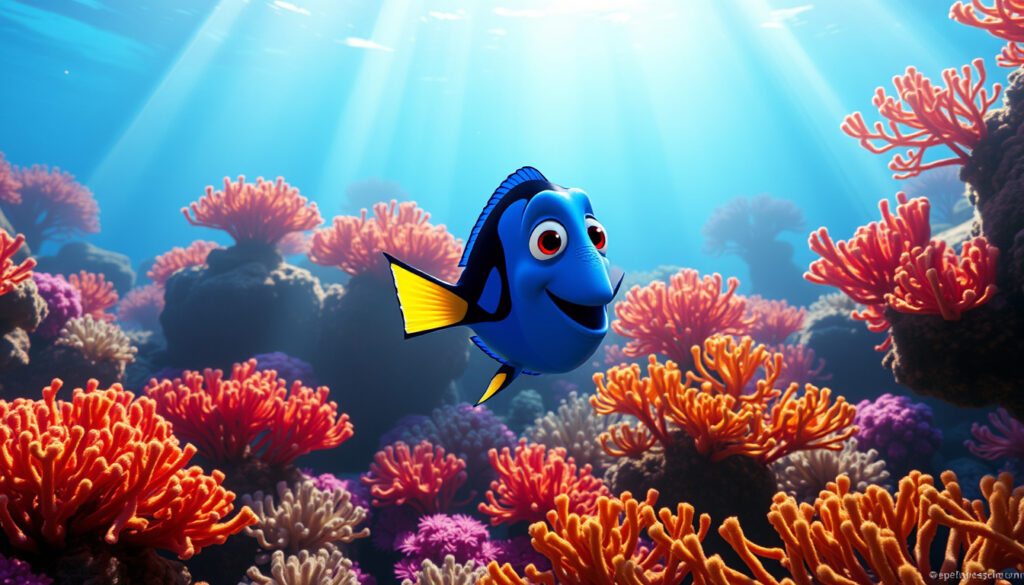
Finding Dory: Sequel, PG Rating, and Autism Representation
Few Pixar sequels have ever had to carry the weight of a catchphrase. Dory’s offhand “Just keep swimming” turned into a generation’s motto, so when Andrew Stanton brought her back in a 2016 sequel, the film had to answer a real question: what happens when a character built for comic relief becomes the hero? The answer was a box‑office phenomenon that quietly changed how animation talks about disability.
Box office: $1.029 billion worldwide ·
Runtime: 97 minutes ·
MPAA rating: PG ·
Release date: June 17, 2016
Quick snapshot
- Finding Dory is the direct sequel to Finding Nemo, released 13 years after the original (Flicks Australia (cinema listing)).
- The MPAA rated it PG for mild thematic elements (Common Sense Media (kids’ media review site)).
- Dory’s short-term memory loss is portrayed as a lifelong condition, not a phase or a temporary setback. (Flicks Australia (cinema listing))
- Pixar has never officially confirmed an autism reading, and no explicitly LGBTQ characters appear in the film (Reefreview.net (film coverage)).
- Dory’s exact age is never stated on screen, and the film itself offers no diagnosis beyond short-term memory loss. (Reefreview.net (film coverage))
- 2003: Finding Nemo premieres and becomes an instant classic (Reefreview.net (film coverage)).
- June 17, 2016: Finding Dory launches in US theaters and quickly becomes one of Pixar’s biggest releases (Flicks Australia (cinema listing)).
- 2016–present: the title remains in regular rotation on Disney+ and home video (IMDb (film database) parental guide).
- UK parents get a U classification, which means all ages are welcome under British rules (British Board of Film Classification (UK ratings regulator)), but Australian experts still advise against it for under-6s (Children and Media Australia (family film watchdog)).
- The autism and LGBTQ interpretation debates will keep following the film until Pixar comments directly. (British Board of Film Classification (UK ratings regulator))
Finding Dory at a glance
Nine data points separate the sequel-hype from the actual release; the pattern parents should notice is the gap between the PG rating and the reassurance that this is “just a kids’ movie.”
| Full title | Finding Dory |
|---|---|
| Studio | Pixar Animation Studios |
| Distributor | Walt Disney Studios Motion Pictures |
| Release date | June 17, 2016 (United States) (Flicks Australia cinema listing) |
| Genre | Animated adventure comedy |
| MPAA rating | PG |
| Runtime | 97 minutes (IMDb parental guide) |
| Box office | $1.029 billion worldwide (Reefreview.net film coverage) |
| Sequel to | Finding Nemo (2003) |
What this means: the headline numbers tell two different stories — a commercial hit with a rating that says “parental guidance” — which is exactly why the age-suitability question below matters more than the box office.
Is Finding Dory a sequel to Finding Nemo?
Yes. Finding Dory continues the story of the 2003 hit rather than rebooting it, with Dory’s search for her parents now at the center. Andrew Stanton returned to direct, Pixar released the film 13 years after the original, and it went on to gross $1.029 billion worldwide (Reefreview.net film coverage).
- It is a direct sequel, not a spin-off: same ocean, same characters, a new mission.
- The 13-year gap is why the sequel’s disability themes landed with a new generation of viewers.
Is Finding Dory hit or flop?
- $1.029 billion worldwide — a hit by any measure.
- The number matters because it let Pixar keep making character-first sequels at a time when the industry favored new franchises.
The context: “hit” and “flop” are the wrong frame. The real story is that a film about a fish with short-term memory loss performed at blockbuster scale — and that scale is what let the disability representation conversation happen at all.
Is Finding Dory rated G or PG?
- US: PG, not G — the MPAA’s note cites “mild thematic elements” (Common Sense Media kids’ media review site).
- Outside the US, the certification drops: IMDb’s parental guide lists a U in the UK and a G in Australia (IMDb parental guide).
The pattern: the US PG rating is the strictest label in the major English‑speaking markets, but the letter says nothing about a child’s emotional readiness — which is the next section’s job.
The implication: the sequel status is settled, but the emotional fit for each child remains the deciding factor.
Is Finding Dory appropriate for kids?
It depends less on the letter rating and more on the child. Common Sense Media recommends Finding Dory for children 6 and up (Common Sense Media kids’ media review site), and Children and Media Australia sets a stricter line: not recommended for under‑6s, with parental guidance for ages 6 to 8 (Children and Media Australia family film watchdog).
- Common Sense Media flags emotionally intense material around separation from parents and family loss — the reason the 6+ floor exists.
- Children and Media Australia warns some scenes may scare young children.
- IMDb’s parental guide records no profanity, sex, or nudity; its frightening and intense scenes are rated mild, though family‑loss themes recur (IMDb parental guide).
The scariest moment is not a shark — it is Dory’s parents disappearing from her memory. For a child who already panics when a parent moves out of sight in a store, this film can hit harder than the rating letters suggest.
Can my 7 year old watch it?
- Yes — 7 sits inside the 6+ (Common Sense Media) band and the 6‑to‑8 parental‑guidance band (Children and Media Australia).
- The realistic caveat: children closer to 6 may need a parent nearby for the separation‑heavy second half.
What this means: the 7‑year‑old decision is the easiest one — watch together, and pause if the family‑loss scenes land harder than expected.
Is Finding Nemo ok for a 4 year old?
- The original Finding Nemo holds a G rating, a step below the sequel’s PG, and is generally treated as suitable from about age 4.
- The 2003 film has the same core separation plot — Nemo is taken from Marlin — so a 4‑year‑old sensitive to separation may find it just as intense as Dory.
The distinction: Dory adds memory‑loss anxiety on top of the separation plot, and that extra layer is why expert guidance for the sequel runs higher than for the original.
What’s a good Disney movie for a 3 year old?
- At 3, the honest answer is: not Finding Dory — both Common Sense Media and Children and Media Australia put the appropriate floor at 6.
- Shorter, lower‑stakes Disney titles work better for true 3‑year‑olds; save Dory for kindergarten or later.
The trade‑off: a 3‑year‑old will enjoy the colors and the fish, but the emotional content arrives before the child can process it. That is a “wait” recommendation, not a ban.
Why this matters: the letter rating sets the legal floor, but the emotional rating — where the separation themes sit — is what predicts whether a child sleeps through the night.
The pattern: the experts agree that emotional readiness, not the rating letter, should guide your decision.
Does Finding Dory have LGBTQ?
No explicit LGBTQ characters appear in Finding Dory — no same‑sex couple, no coming‑out arc, and no studio‑confirmed queer coding. The conversation exists, but it is a viewer conversation, not something the script states directly.
Is Dory autistic?
- Dory’s short‑term memory loss is shown as a severe, lifelong trait; the film never names it as autism.
- Andrew Stanton told The Florida Times‑Union he was not trying to make Dory a literal representation of a specific disability (The Florida Times‑Union regional newspaper).
- That has not stopped the reading: many autistic viewers and advocacy voices describe Dory as relatable neurodivergent coding.
This guide treats “Dory is autistic” as a community interpretation, not a studio fact. Pixar has never confirmed a diagnosis, and Andrew Stanton has said he was not aiming for a literal representation.
The nuance: the confirmed fact is the disability representation; the unconfirmed label is the specific diagnosis. Both can be true at once, and the film benefits from both conversations.
What is the message of Finding Dory?
The film’s thesis is that a limitation is not an identity. Dory’s memory loss never stops her from being the most persistent character on screen — her catchphrase becomes a strategy, not a joke.
- Andrew Stanton described Dory’s memory problem as funny and helpful in Finding Nemo but a genuine burden in the sequel (The Florida Times‑Union regional newspaper).
- Review coverage highlights disability, anxiety, bullying, and accessibility as the film’s central themes.
- The parenting angle: the movie rewards conversation afterward — about difference, frustration, and how friends help.
What this means: the message lands because Dory is never cured and never punished — the film’s bet is that perseverance, not memory, is the superpower.
How old is Dory meant to be?
The movie never states Dory’s age. Flashbacks show her as a child with the same forgetfulness; in the main story she is an adult regal blue tang making her way across the ocean on her own.
- Fan estimates tend to place her in her 20s, but no number exists on screen.
- Against Nemo — a young fish with a parent right there — Dory is implied to be older and far more experienced with loss.
Dory’s vague age is a feature, not a bug: the film cannot be dismissed as “too young to know better,” which lets her memory loss stay the story instead of a birth year.
The point: Dory is ageless in the way the best animated characters are — the story cares about her memory, not her birth certificate.
Finding Dory age ratings: how the experts compare
Five different gatekeepers, five different answers — and one pattern: the stricter the emotional‑content lens, the later the recommended viewing age.
| Rating body | Classification | Suggested age | What parents should know |
|---|---|---|---|
| MPAA (US) | PG | No official age line | Rated PG for mild thematic elements (Common Sense Media review, cited above) |
| BBFC (UK) | U | Suitable for all ages | British guidance defines U as universal, meaning no one is barred (British Board of Film Classification UK ratings regulator) |
| Australian Classification Board | G | No official age line | G allows all ages, but Children and Media Australia says some scenes may scare young children (Children and Media Australia family film watchdog) |
| Common Sense Media | — | 6+ | Separation and family‑loss themes drive the recommendation (review cited above) |
| Flicks Australia | — | 8+ | Cinema guide repeats the scary‑scenes warning for the under‑8 crowd (Flicks Australia cinema listing) |
The pattern: the US and UK systems classify by content, while media watchdogs classify by emotional readiness — and that second question is the one parents are actually asking.
Finding Dory: the production sheet
Eight rows of credits and numbers, one editorial filter: the details that predict how a film plays — director, runtime, rating — matter more than the ones that fill a poster.
| Director | Andrew Stanton | Film credits |
|---|---|---|
| Studio | Pixar Animation Studios | Film credits |
| Runtime | 97 minutes | IMDb parental guide (cited above) |
| US release date | June 17, 2016 | Flicks Australia listing (cited above) |
| MPAA rating | PG | Common Sense Media review (cited above) |
| UK certification | U | IMDb parental guide (cited above) |
| Australian certification | G | IMDb parental guide (cited above) |
| Box office | $1.029 billion worldwide | Reefreview.net coverage (cited above) |
The implication: the production sheet is mostly routine Pixar excellence; the rating row is the one that changes a family’s evening plan.
Finding Dory pros and cons for parents
Upsides
- Disability representation with empathy: Dory leads the story, and her memory loss is treated as a trait, not a punchline.
- No profanity, sex, or nudity content recorded in the parental guide.
- Positive messages about perseverance, friendship, and family.
- UK U certification, the BBFC’s most family‑friendly category.
Downsides
- Separation and family‑loss themes recur and may upset sensitive children.
- Children and Media Australia advises against the film for under‑6s.
- The PG rating means parental guidance is expected — not a set‑and‑forget screening.
- For children under about 4, the emotional content outweighs the entertainment value.
The trade‑off: this is a “yes, with you beside them” movie, not a “yes, anytime” one — the upsides are real, and so is the need for a parent in the room.
What’s confirmed and what’s still unclear
Confirmed facts
- Finding Dory is a direct sequel to Finding Nemo, released 13 years later.
- It is rated PG, and the MPAA’s note cites mild thematic elements.
- It grossed more than $1 billion worldwide.
- Dory has a severe, lifelong short‑term memory loss that the film portrays without a cure narrative.
What’s unclear
- Whether Dory is “autistic” canonically — Pixar has never confirmed an autism reading.
- Whether any LGBTQ representation was intended, since no explicit characters appear.
- Dory’s exact age, which is never stated on screen.
- How the filmmakers would officially label her condition if asked directly — no studio statement exists.
The pattern: the film’s facts are solid, and the interpretations are optional — parents and viewers can accept both without contradiction.
In their words
“Just keep swimming.”
Dory, voiced by Ellen DeGeneres
Andrew Stanton told The Florida Times‑Union he was not trying to make Dory a literal representation of a specific disability — the forgetfulness that was comedy in the first film becomes a genuine burden in the sequel (The Florida Times‑Union regional newspaper).
Andrew Stanton, director of Finding Dory
The pattern: the character and the director say the same thing — Dory is not her condition, even when the condition shapes everything.
The takeaway
Finding Dory works best when parents treat the rating as the floor and the child as the ceiling. The classifications run from PG to U to G, the expert recommendations cluster at 6+, and Andrew Stanton’s own words frame Dory’s memory loss as a burden that becomes a strength. For parents weighing whether to press play, the decision is clear: wait until at least age 6, watch beside your child, and let the credits turn into a conversation about memory and difference — or the separation scenes will set the agenda first.
Frequently asked questions
Is Finding Dory suitable for a 3-year-old?
No. Children and Media Australia recommends 6+ as the floor, and Common Sense Media agrees. For a 3‑year‑old, the separation scenes can outweigh the bright colors.
Does Finding Dory have any scary scenes?
The frightening and intense scenes are mild, but they cluster around separation from parents and family loss — a theme that recurs through the film and can scare younger children.
What is the age rating for Finding Dory in the UK?
The BBFC gives Finding Dory a U — universal, suitable for all ages. UK parents should still weigh the expert 6+ advice and the PG‑level emotional content.
Is Finding Dory on Disney+?
Yes. Finding Dory is available to stream on Disney+ in most regions, alongside Finding Nemo.
Who are the main characters in Finding Dory?
Dory (Ellen DeGeneres), Marlin (Albert Brooks), Nemo (Hayden Rolence), Hank the octopus (Ed O’Neill), Destiny the whale shark (Kaitlin Olson), and Bailey the beluga (Ty Burrell).
How long is Finding Dory?
97 minutes, or 1 hour and 37 minutes.
Related reading
More related posts
 The Last Kingdom – Complete Guide to Seasons, Cast and Sequel
 Brian Thompson Shooting: UnitedHealthcare CEO Killed in Midtown Manhattan
 Steffi Graf Today: Where She Lives, Net Worth, and Life Now
 Christina Ricci: Career, Personal Life, and Key Facts
 Ric Flair 2025: Heart Diagnosis and Net Worth Update
 Best Car Insurance Australia: Compare Top Insurers for 2026
 Lisa Millar: ABC Journalist, Partner, Weight Loss & Career
 Michael Porter Jr. – Stats, Injuries, Career Timeline
