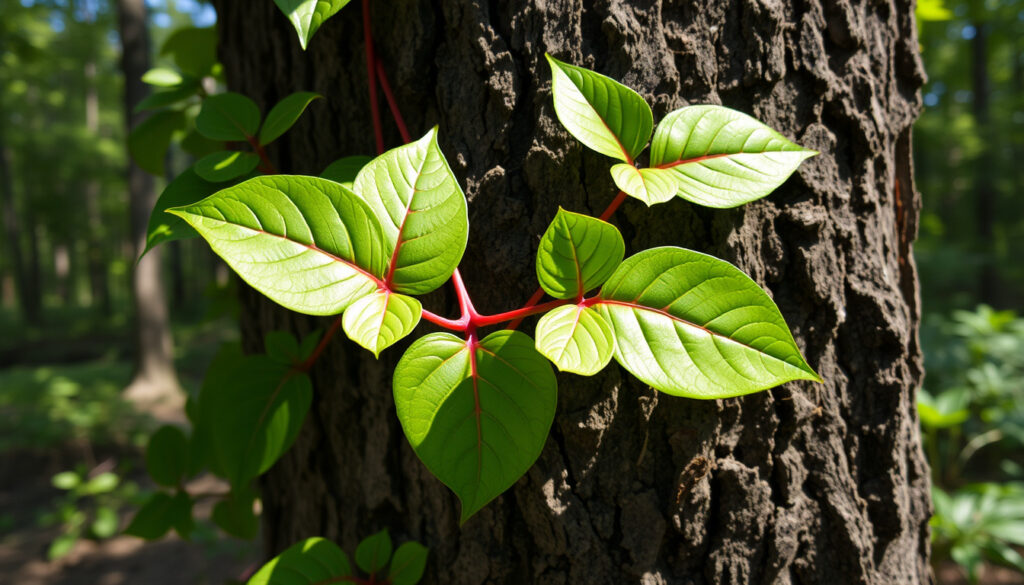
Poison Ivy: Rash Causes, Treatment & Identification
Most people know poison ivy by the itch it leaves behind, but few recognise the plant itself—or the fact that it doesn’t grow wild in many parts of the world. Whether you’re a hiker in North America, a gardener in the UK, or someone who just brushed against a suspicious vine, this guide unpacks the biology, geography, and practical steps you need—no myths, no panic.
Scientific name: Toxicodendron radicans ·
Allergenic compound: Urushiol ·
Affected population percentage: 85% of people ·
Reaction onset time: 12 to 48 hours ·
Rash duration: 2 to 3 weeks
Quick snapshot
- Contact with poison ivy causes an allergic reaction in 85% of people (Cleveland Clinic (major U.S. hospital system))
- Urushiol is the oil responsible for the rash (Mayo Clinic (top-ranked medical center))
- Poison ivy is not native to Ireland or the UK (Woodland Trust (UK conservation charity))
- Whether poison ivy can establish a permanent ecological presence in the UK (Woodland Trust (UK conservation charity))
- Exact percentage of people who remain immune to urushiol (Cleveland Clinic (major U.S. hospital system))
- Rash onset: 12 to 48 hours after contact (Mayo Clinic (top-ranked medical center))
- Rash duration: 2 to 3 weeks (Cleveland Clinic (major U.S. hospital system))
- Wash skin immediately with soap and water (Johns Hopkins Medicine (renowned academic medical institution))
- Apply calamine lotion or corticosteroid cream for symptom relief (U.S. Food and Drug Administration (FDA))
Five key facts about poison ivy, from leaf size to how long the rash hangs around.
| Attribute | Value |
|---|---|
| Average leaf length | 2 to 4 inches |
| Rash onset time | 12 to 48 hours after contact |
| Number of leaflets | Three |
| Primary allergy compound | Urushiol |
| Rash duration | 2 to 3 weeks |
What does poison ivy do to humans?
Poison ivy contains urushiol, an oily resin that triggers allergic contact dermatitis in most people. When the oil touches skin, it binds to proteins and activates an immune response that shows up as redness, swelling, blisters, and intense itching. The reaction typically appears 12 to 48 hours after exposure and lasts between 2 and 3 weeks (Cleveland Clinic (major U.S. hospital system)).
What happens if a human touches poison ivy?
- The rash is not contagious, but urushiol can spread if it remains on clothing, tools, or pet fur (Mayo Clinic (top-ranked medical center))
- Blisters that break open do not spread the rash; the fluid inside is not urushiol (Cleveland Clinic (major U.S. hospital system))
- Severe cases may require medical attention if the rash covers large areas or affects the face, eyes, mouth, or genitals (U.S. Food and Drug Administration (FDA))
The pattern: three distinct phases—exposure, immune reaction, and recovery—each with its own rules about what helps and what hurts.
Because urushiol can stay active on surfaces for months, a jacket hung in the closet after a hike can cause a second rash weeks later. Wash everything—including the dog—in warm soapy water.
The implication: treating poison ivy is a multi-step process that doesn’t end with washing the skin.
Does poison ivy grow in Europe?
True poison ivy (Toxicodendron radicans) is native to North America and East Asia. It does not occur naturally in Europe, the UK, or Ireland. While there are rare reports of poison ivy being introduced through gardens or imported soil, it has not established wild populations (Woodland Trust (UK conservation charity)).
Is there any poison ivy in Ireland?
- No verified wild populations of poison ivy exist in Ireland (Woodland Trust (UK conservation charity))
- Reports of “poison ivy” in Ireland almost always refer to English ivy (Hedera helix) or Irish ivy (Hedera hibernica)
Can you get poison ivy in the UK?
- Poison ivy is not a native UK plant and is not established in the wild (Woodland Trust (UK conservation charity))
- Occasional nursery imports may introduce the plant, but it rarely escapes cultivation
The implication: for UK and Irish readers, the plant you are worried about is almost certainly a harmless ivy. The real risk is misidentifying a non-toxic climber as poison ivy—or, conversely, ignoring a lookalike that does cause irritation.
Is Irish ivy poisonous?
Irish ivy (Hedera hibernica) and English ivy (Hedera helix) are not the same as poison ivy. They belong to the Araliaceae family, not the Toxicodendron genus. Contact with English or Irish ivy can cause mild skin irritation in sensitive individuals, but it does not contain urushiol and does not produce the classic poison ivy rash (Woodland Trust (UK conservation charity)).
What is the most poisonous plant in Ireland?
- Giant hogweed (Heracleum mantegazzianum) is considered the most dangerous plant in Ireland, causing severe burns when sap contacts skin and sunlight
- Other toxic plants include hemlock water-dropwort and foxglove
- None of these are related to poison ivy
The trade-off: while Irish ivy is safe to touch, confusion about its identity may mean people ignore a real threat like giant hogweed. Knowing the difference is not just trivia—it’s safety.
What kills poison ivy permanently?
If you do find poison ivy on your property (unlikely in the UK, but possible in North America), removal requires caution. The oil remains active even in dead plant material, so handling it without protection is risky.
Poison ivy treatment (removal)
- Systemic herbicides containing glyphosate or triclopyr are effective when applied to the leaves following the label instructions
- Manual removal: dig up the entire root system. Wear long sleeves, pants, and gloves. Never use a weed whacker that can spray plant fragments
- Do not burn poison ivy: smoke can carry urushiol and cause severe lung irritation (Cleveland Clinic (major U.S. hospital system))
- Dispose of plant material in sealed bags—do not compost
Why this matters: a single missed root can regrow, and the oil stays potent for years. Persistent removal, not quick fixes, is the only way to be rid of it.
Chemical herbicides kill the plant, but dead poison ivy still contains urushiol. Wear gloves even when pulling up dried vines. The oil remains active for up to five years on dead wood.
The implication: removal is a long-term commitment, not a one-time task.
Poison ivy identification features (spec table)
Seven distinguishing traits, one key takeaway: the “leaves of three” rule is a good start, but shape, texture, and growth habit matter just as much.
| Feature | Description |
|---|---|
| Leaf arrangement | Three leaflets per leaf (compound leaf) |
| Leaf shape | Oval or almond-shaped, often with a pointed tip |
| Leaf edges | May be smooth, toothed, or lobed—variable |
| Leaf surface | Shiny or dull, hairless or slightly hairy |
| Color | Reddish in spring, green in summer, yellow/orange/red in fall (U.S. Food and Drug Administration (FDA)) |
| Growth habit | Vine climbing on trees/fences, or low shrub |
| Stem/vine | Hairy, ropelike appearance on older vines (Cleveland Clinic (major U.S. hospital system)) |
| Berries | White or cream-colored, waxy, clustered |
What is poison ivy famous for?
Poison ivy is infamous for two very different reasons: the plant’s ability to cause a severe, blistering rash, and the DC Comics character Poison Ivy, a Batman villain with plant-based powers. The two are unrelated except in name—the character does not cause dermatitis, and the plant does not have superpowers.
Poison Ivy character – Wikipedia
- The DC Comics character Poison Ivy (Pamela Isley) first appeared in 1966 in Batman #181
- She is a botanist and eco-terrorist who uses plant toxins, pheromones, and vines as weapons
- Despite the name, the character’s abilities are not based on the actual plant’s biology
The paradox: pop culture has made poison ivy more famous than almost any other plant, yet most people would walk right past the real thing in the woods. The fame is a mix of genuine hazard and a cool character name.
Clarity section
Confirmed facts
- Contact with poison ivy causes an allergic reaction in 85% of people (Cleveland Clinic (major U.S. hospital system))
- Urushiol is the oil responsible for the rash (Mayo Clinic (top-ranked medical center))
- Poison ivy is not native to Ireland or the UK (Woodland Trust (UK conservation charity))
What’s unclear
- Whether poison ivy can establish a permanent ecological presence in the UK (Woodland Trust (UK conservation charity))
- Exact percentage of people who remain immune to urushiol (Cleveland Clinic (major U.S. hospital system))
- Washing skin within 30 minutes of exposure reduces the risk of rash (Mayo Clinic (top-ranked medical center))
- Topical corticosteroids, calamine lotion, and antihistamines relieve symptoms (U.S. Food and Drug Administration (FDA))
These confirmed facts provide a solid foundation, while the open questions highlight where more research is needed.
Quotes from experts
Urushiol is the oil found in poison ivy, poison oak, and poison sumac. It’s the culprit that triggers the allergic reaction.
Wash your skin right away if you come into contact with poison ivy. Use soap and water, and wash within 30 minutes to help prevent the oil from being absorbed.
Johns Hopkins Medicine (renowned academic medical institution)
English ivy is a common climbing plant native to the UK and widely found in woods and gardens. It is not poison ivy.
These expert statements reinforce the core facts: urushiol triggers the rash, prompt washing prevents it, and English ivy is a harmless lookalike.
Summary
Poison ivy is a real biological hazard in North America and parts of East Asia, but a near-total non-issue in the UK and Ireland—where garden ivy causes the confusion. For anyone who does encounter the plant, the steps are simple: identify it by its three leaflets, avoid contact, wash promptly, and treat symptoms with over-the-counter remedies. For anyone who steps into the woods or a garden, the consequence of misidentifying this plant is an avoidable and miserable week—so learning the real thing is a practical act of self-defense, not just trivia.
aces.edu, snhhealth.org, msdmanuals.com, mayoclinic.org, my.clevelandclinic.org, healthline.com, mayoclinic.org, elliothospital.org
For a more detailed look at how to identify the plant and treat the rash, see a guide to poison ivy identification and treatment.
Frequently asked questions
Can poison ivy rash spread through scratching?
No. The rash is a reaction to urushiol, not to the fluid in blisters. Scratching can cause secondary infection, but it will not spread the rash to other parts of the body once the oil has been washed off (Cleveland Clinic (major U.S. hospital system)).
How long does poison ivy rash last?
Most poison ivy rashes last 2 to 3 weeks, with blisters healing on their own if left undisturbed (Mayo Clinic (top-ranked medical center)).
Is poison ivy contagious person to person?
The rash itself is not contagious, but urushiol can be transferred from person to person if it remains on skin, clothing, or objects (Cleveland Clinic (major U.S. hospital system)).
Can you become immune to poison ivy?
Some people are naturally less sensitive to urushiol, but immunity is not guaranteed. Sensitivity can change over time, and repeated exposure may increase the severity of reaction (Cleveland Clinic (major U.S. hospital system)).
What should you do if you think you touched poison ivy?
Wash the area with lukewarm water and plain soap as soon as possible—ideally within 30 minutes. Johns Hopkins Medicine recommends washing three times gently (Johns Hopkins Medicine (renowned academic medical institution)).
Are there plants that look like poison ivy?
Yes. Box elder seedlings, Virginia creeper (young leaves), and fragrant sumac are common lookalikes. The key is the “three leaflets” rule combined with the vine’s hairy appearance and the leaf’s variable edges (Cleveland Clinic (major U.S. hospital system)).
More related posts
 Nelson Sardelli: Biography, Age, and Mariska Hargitay Link
 Australia Day 2025: Date, History, Events, and Controversy
 Brendan Gleeson: Career, Irish Fluency, and Key Relationships
 Attila the Hun: Biography, Empire, Death, and Legacy
 Tom Wilkinson: A Legendary British Actor’s Life and Death
 Liv Hewson: Career, Top Surgery, Relationship & More 2026
 Steve Coogan: Partner, Teetotal, Children, Net Worth & Facts
 Australia Heatwave 40C Forecast: January 2026 Temperatures
