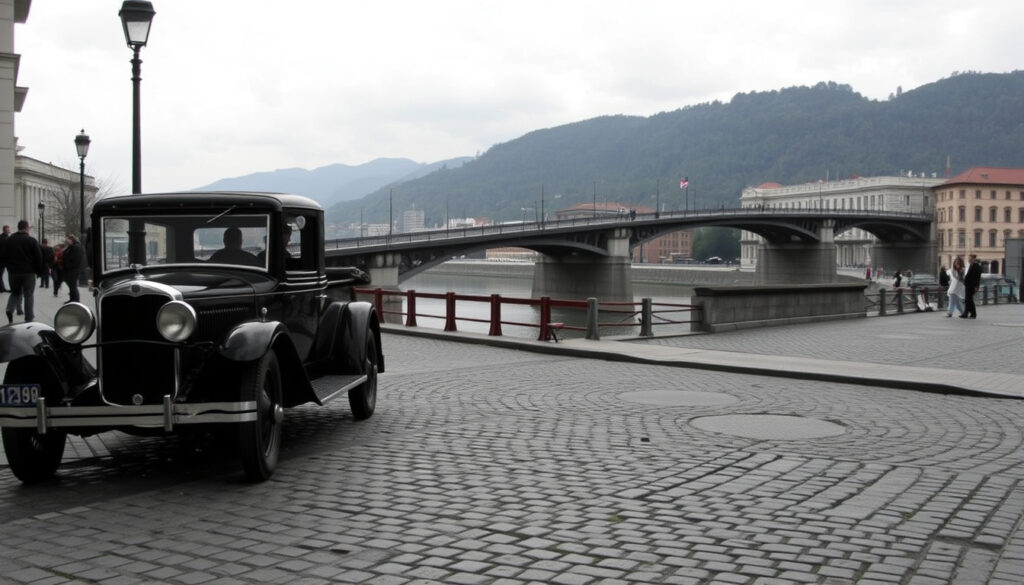
Archduke Franz Ferdinand: Assassination That Triggered WW1
It’s a story that begins with a wrong turn, a missed opportunity for security, and arguably a decision to grab a sandwich—a chain of small events that ended with two bullets and a global war. On June 28, 1914, the heir to the Austro-Hungarian throne was shot dead in Sarajevo by a 19-year-old Bosnian Serb named Gavrilo Princip.
Born: 18 December 1863 ·
Assassinated: 28 June 1914 ·
Age at death: 50 ·
Assassin: Gavrilo Princip ·
Trigger event: World War I
Quick snapshot
- Gavrilo Princip shot Archduke Franz Ferdinand on 28 June 1914 (Britannica, encyclopedia entry)
- The assassination triggered the July Crisis leading to WWI (Britannica)
- Princip’s exact regrets remain uncertain (Britannica, biography)
- 28 June 1914: Assassination in Sarajevo (Britannica)
- 28 July 1914: Austria-Hungary declares war on Serbia (Cambridge University Library)
- World War I lasted until 1918, causing over 20 million deaths (Wikipedia, community‑reviewed entry)
- The Austro-Hungarian Empire dissolved after the war (Wikipedia)
Seven key facts about the Archduke’s life and death, at a glance:
| Label | Value |
|---|---|
| Full Name | Archduke Franz Ferdinand Carl Ludwig Joseph Maria of Austria |
| Born | 18 December 1863, Graz, Austrian Empire |
| Died | 28 June 1914, Sarajevo, Bosnia and Herzegovina |
| Age at Death | 50 |
| Title | Archduke of Austria-Este |
| Wife | Sophie, Duchess of Hohenberg |
| Children | Three: Sophie, Maximilian, Ernst |
Why did they assassinate Archduke Franz Ferdinand?
The assassination was not a random act of violence. It emerged from a deep well of nationalist frustration and a secret network of revolutionaries.
What were the political motivations of Gavrilo Princip?
- Princip was a Bosnian Serb nationalist who opposed Austro-Hungarian rule over Bosnia (Britannica, biographical entry).
- He and his co-conspirators wanted to free Bosnia from the Austro-Hungarian Empire and unite it with Serbia.
What was the Black Hand?
- The Black Hand (Ujedinjenje ili Smrt – “Unification or Death”) was a secret military society founded in Serbia in 1911. According to Britannica’s World War I overview, the assassins were linked in some accounts to Serbian nationalist networks such as the Black Hand.
Why was Franz Ferdinand a target?
- Franz Ferdinand was the heir presumptive to the throne of Austria-Hungary (Britannica).
- He advocated for greater autonomy for Slavs within the empire (trialism), a plan that threatened Serbian nationalist ambitions for a unified South Slavic state.
Bottom line: The attackers saw the Archduke as a symbol of Austro-Hungarian oppression and a political threat to their dream of a Greater Serbia. Their target was chosen for its symbolic weight, not personal animosity.
The implication: The assassination was a direct product of rising nationalism and the empire’s inability to manage ethnic tensions.
Who was archduke Ferdinand and why was he important?
Before the assassination, Franz Ferdinand was a relatively private figure in the vast Habsburg monarchy. His importance grew enormously after his death.
What was Franz Ferdinand’s position in the empire?
- He was the heir presumptive—next in line to the throne after the suicide of Crown Prince Rudolf in 1889 (Britannica).
What were his political views?
- Franz Ferdinand was a reformist who wanted to reorganize the dual monarchy into a triple monarchy (Austria-Hungary-Slavia), giving Slavs more representation. This clashed directly with Serbian nationalists who wanted independence from Vienna.
Why was he a controversial figure?
- His morganatic marriage to Sophie Chotek (a countess, not of royal blood) caused tension within the imperial court. In Sarajevo on June 28, 1914, the couple were on a military inspection tour, a role that highlighted his rising political influence (Britannica World War I entry).
The pattern: Franz Ferdinand was both a reformer and a symbol of a fading empire. His assassination removed a voice for Slavic autonomy and handed hardliners in Vienna a reason to crush Serbia.
Who actually shot Franz Ferdinand?
The identity of the shooter is well established, but the details of the day remain a tale of missed chances and a fateful lunch.
Who was Gavrilo Princip?
- Gavrilo Princip was born on 25 July 1894 in Bosnia (Britannica biography). He was a Bosnian Serb student and member of the revolutionary group Young Bosnia.
Why did Princip shoot the Archduke?
- Princip and his group had planned to assassinate the Archduke during his visit to Sarajevo. Earlier that morning, one conspirator threw a grenade that missed the Archduke’s car (Britannica). Later, the Archduke’s driver took a wrong turn onto Franz Josef Street. Princip, who had stepped into a nearby delicatessen (the “sandwich” moment), saw the car stopped in front of him and fired two shots at close range.
What happened to Princip after the assassination?
- Princip was arrested immediately. At his trial in October 1914, he stated, “I wanted to do something good for the people.” He was sentenced to 20 years (underage spared the death penalty) and died on 28 April 1918 from tuberculosis (Britannica biography).
What this means: The assassination was a combination of determination and sheer luck. The wrong turn and the sandwich break are not myths—they are well-documented coincidences that made the day’s tragic outcome possible.
Why did killing Archduke Franz Ferdinand start WW1?
The assassination alone did not cause the war—it was the spark that ignited a powder keg of alliances, mobilizations, and decades of tension.
What was the July Crisis?
- The assassination gave Austria-Hungary a pretext to deal with Serbia. According to Cambridge University Library (academic archive), the event was a key turning point that provided the excuse for war.
How did alliances lead to war?
- Europe was divided into two alliance systems: the Triple Entente (France, Russia, Britain) and the Triple Alliance (Germany, Austria-Hungary, Italy). After Austria-Hungary declared war on Serbia on 28 July 1914, Russia mobilized to defend Serbia. Germany declared war on Russia on 1 August 1914, and the chain reaction unfolded.
What was the Austro-Hungarian ultimatum to Serbia?
- On 23 July, Austria-Hungary delivered a harsh ultimatum to Serbia with demands that infringed on its sovereignty. Serbia accepted most but not all terms; Vienna used the partial rejection to declare war.
How did Germany’s blank check influence the situation?
- Germany gave Austria-Hungary unconditional support (the “blank check”) on 5 July, encouraging a hard line against Serbia. This emboldened Vienna to issue the ultimatum and reject Serbian compromises.
The trade-off: By backing Austria unconditionally, Germany turned a regional crisis into a continental war. Without the blank check, Austria might have accepted diplomatic mediation, and the world might have avoided the Great War.
Who was the guy who started ww1?
Assigning blame for World War I is a hundred-year-old debate. The assassination was the trigger, but structural factors made war almost inevitable.
Was Gavrilo Princip solely responsible?
- No. Princip fired the bullets, but the war was caused by the decisions of leaders in Vienna, Berlin, St. Petersburg, Paris, and London.
What role did Austria-Hungary play?
- Vienna saw the assassination as a chance to crush Serbian nationalism. It declared war on Serbia on 28 July 1914, directly starting the conflict.
What role did Germany play?
- Germany’s blank check and subsequent declaration of war on Russia and France escalated the conflict far beyond the Balkans.
Was there a single guilty party?
- Historians remain divided. The National WWI Museum and Memorial (official museum site) notes that the assassination at around 11 a.m. on 28 June 1914 set the clock ticking, but the ultimate decision for war rested with the leaders of Europe.
The implication: Blaming one person is too simple. The war resulted from a system of alliances, militarism, nationalism, and imperial rivalries. Princip provided the occasion, not the cause.
Timeline: Key dates from birth to war
The timeline below shows how a single life and a single death connected to a continent-wide conflict.
- 18 December 1863 – Franz Ferdinand born in Graz, Austrian Empire.
- 1896 – Becomes heir presumptive after the death of Crown Prince Rudolf.
- 28 June 1914 – Assassinated in Sarajevo by Gavrilo Princip (Britannica).
- 23 July 1914 – Austria-Hungary issues ultimatum to Serbia (Wikipedia).
- 28 July 1914 – Austria-Hungary declares war on Serbia, beginning World War I (Cambridge University Library).
- 1 August 1914 – Germany declares war on Russia, escalating the conflict (Wikipedia).
The catch: Each date for escalation was brushed by missed chances—a negotiated peace after Sarajevo might have stopped the slide, but no leader blinked.
What we know and what remains unclear
Historians agree on the basic events but debate the details and the blame.
Confirmed facts
- Gavrilo Princip shot Archduke Franz Ferdinand on 28 June 1914 (Britannica).
- The assassination triggered the July Crisis leading to WWI (Britannica).
- Austria-Hungary declared war on Serbia on 28 July 1914 (Cambridge University Library).
What’s unclear
- Whether Princip regretted the assassination—some accounts report remorse, others don’t (Britannica).
- The precise degree of responsibility of different nations for starting the war remains a historical debate (National WWI Museum).
Rumors and unverified details
- The precise last words of Franz Ferdinand are disputed among accounts (no authoritative source available).
Quotes from the key figures
“Sophie, Sophie, don’t die! Live for our children!”
— Alleged last words of Archduke Franz Ferdinand, reported by multiple accounts (though the exact phrasing is contested)
“I wanted to do something good for the people.”
— Gavrilo Princip, at his trial in October 1914 (Britannica biography)
The paradox: The assassin saw himself as a hero, yet his act triggered a war that killed millions—including many of the people he claimed to represent.
Summary: A bullet that reshaped the world
The assassination of Archduke Franz Ferdinand is a textbook case of how a small event can have colossal consequences—but only when the tinder is already dry. The long-term causes of World War I—imperial rivalry, nationalist fervor, militarism, and a tangled web of alliances—made a major war likely. The Sarajevo shots merely lit the fuse. For students of history, the lesson is clear: wars often start not with grand conspiracies but with a series of small failures—a wrong turn, a missed alert, a stubborn diplomat. The Archduke’s death reminds us that a single bullet can still reshape the world, but only when the political powder keg is already stacked.
en.wikipedia.org, dark-tourism.com, online.norwich.edu, meetbosnia.com, youtube.com
Historians widely agree that the assassination triggered the war set off a chain of events that escalated into global conflict.
Frequently asked questions
What were Franz Ferdinand’s last words?
Multiple versions exist. The most commonly reported words are “Sophie, Sophie, don’t die! Live for our children!” but the exact phrasing is not definitively recorded.
Did Gavrilo Princip regret killing Franz Ferdinand?
Some accounts suggest he expressed remorse during his imprisonment, while others claim he remained steadfast in his nationalist beliefs. The historical record is inconclusive (Britannica biography).
What type of car was the Archduke riding in?
The vehicle was a 1911 Gräf & Stift Double Phaeton. It is preserved at the Museum of Military History in Vienna (Museum of Military History Vienna).
Who were his wife and children?
His wife was Sophie, Duchess of Hohenberg. They had three children: Princess Sophie, Maximilian Duke of Hohenberg, and Prince Ernst.
What was the Black Hand organization?
The Black Hand (Unification or Death) was a secret Serbian nationalist society involved in the assassination plot. According to Britannica’s World War I entry, some accounts link the assassins to this group.
Are there any archdukes living today?
The title of Archduke of Austria is now used by descendants of the Habsburg family, but it holds no political power. The current head of the House of Habsburg is Archduke Karl von Habsburg (born 1961).
Related reading
- Julius Caesar: Biography, Assassination, and Legacy – Another world-altering assassination that reshaped history.
- Joseph Stalin: Rise to Power, WW2 Leadership & Cult of Personality – How the aftermath of WWI created the conditions for Stalin’s rise.
More related posts
 Olympics Medal Tally – Final Paris 2024 Standings
 Diane Kruger: Age, Net Worth, Kids, and Life in 2025
 Good Things Festival 2025: Dates, Lineup, Tickets & Locations
 Guide Dogs Pet Insurance – Best UK Providers, Costs and Coverage
 Chris Lilley: Controversy, Characters & Current Status
 Ivan the Terrible: Russia’s First Tsar, Reforms & Legacy
 Jared Kushner: Biography, Net Worth, Accusations, and Family
 Dove Cameron: Age, Real Name, Relationship, and Tattoo Story
