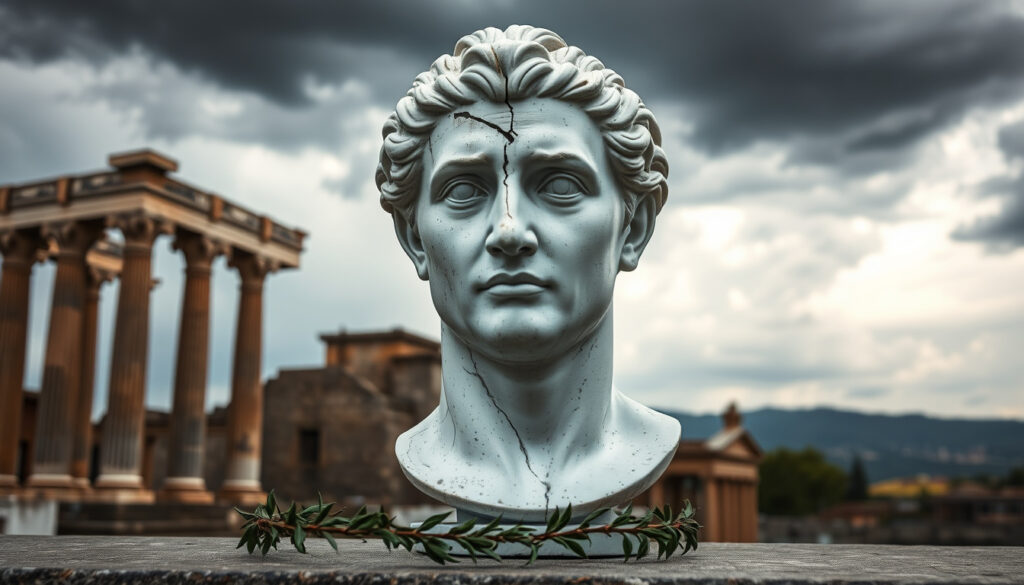
Julius Caesar: Biography, Assassination, and Lasting Legacy
When a man’s last words are still debated two thousand years later, you know he left an impression. Julius Caesar wasn’t just a Roman general who conquered Gaul — he reshaped the political world and, through Shakespeare, the literary one too.
Full name: Gaius Julius Caesar · Born: July 100 BC · Died: March 15, 44 BC (Ides of March) · Role: Roman general, statesman, dictator · Key achievement: Conquest of Gaul, crossing the Rubicon, reforming the calendar · Famous quote (attributed): Veni, vidi, vici (I came, I saw, I conquered)
Quick snapshot
- Assassinated on March 15, 44 BC by a group of senators (Biography.com)
- Roman general and dictator who conquered Gaul (Biography.com)
- Reformed the Roman calendar (Julian calendar) (Biography.com)
- Whether Brutus truly regretted his role (conflicting historical accounts)
- The exact nature of Caesar’s relationship with Cleopatra (political vs romantic)
- Caesar’s last words — Et tu, Brute? is Shakespeare’s invention
- 100 BC: Born in Rome
- 60 BC: Forms First Triumvirate
- 49 BC: Crosses the Rubicon
- 44 BC (Mar 15): Assassinated on Ides of March
- Civil war erupts after Caesar’s death
- Octavian (Augustus) rises to power
- Roman Republic ends, Empire begins
Seven key facts, one pattern: Caesar’s career was a relentless drive toward consolidation of power — militarily, politically, and personally.
The table below draws a contrast between the official record and the historical verdict.
| Attribute | Value |
|---|---|
| Full name | Gaius Julius Caesar |
| Born | July 100 BC, Rome |
| Died | March 15, 44 BC, Rome |
| Cause of death | Assassination by senators |
| Notable title | Dictator perpetuo (Dictator in perpetuity) |
| Consort | Cleopatra VII (relationship) |
| Known for | Conquest of Gaul, crossing the Rubicon, role in transition from Republic to Empire |
What was Julius Caesar best known for?
What were his major military conquests?
Caesar’s military campaigns extended Roman power across western Europe. His conquest of Gaul (58–50 BC) brought modern-day France, Belgium, and parts of the Netherlands under Roman control (Biography.com). He also launched the first Roman invasion of Britannia, according to Study.com (an educational resource site). His own accounts of the Gallic Wars remain vital historical sources.
What political reforms did he implement?
After defeating his rival Pompey, Caesar was appointed dictator for life — a move that alarmed senators who feared monarchy (Biography.com). He introduced land reforms, debt relief, and restructured the Senate. His most enduring reform was the Julian calendar, which fixed the year at 365.25 days — the basis for the modern Gregorian calendar.
What is his legacy?
Caesar’s name became synonymous with supreme power: Kaiser and Tsar both derive from his title. His assassination triggered the end of the Roman Republic and the rise of the Empire under his adopted heir Octavian (Biography.com). The pattern: Caesar concentrated power so effectively that the Republic could not survive his removal.
Why was Caesar assassinated?
Who were the conspirators?
The plot was led by Gaius Cassius Longinus and Marcus Junius Brutus, along with roughly 60 other senators (Biography.com). Brutus’s involvement was particularly striking — Caesar had pardoned him after the civil war and treated him like a son.
What were the political motives?
The conspirators claimed they acted to preserve the Republic. Caesar’s appointment as dictator for life, his accumulation of powers, and rumors he planned to have himself crowned king convinced many that the Republic was already dead in all but name (Biography.com).
Where and when did the assassination happen?
On the Ides of March — March 15, 44 BC — Caesar was stabbed 23 times in the Portico of Pompey, part of the Theatre of Pompey, where the Senate was meeting (Biography.com). The implication: the location itself was symbolic — a spot tied to Caesar’s former rival, Pompey, whom he had defeated.
The assassination didn’t just kill a man — it killed a system of governance. Within two decades, the Republic was gone, replaced by the Empire under Augustus. The conspirators freed Rome from Caesar, but not from autocracy.
Who were Julius Caesar’s lovers?
Cleopatra
Caesar met Cleopatra VII, Queen of Egypt, in 48 BC during the Roman civil war. Their relationship produced a son, Caesarion, and solidified a political alliance between Rome and Egypt. The nature of the relationship — political versus romantic — remains debated by historians.
Servilia
Servilia was the mother of Brutus and a long-time mistress of Caesar. According to Wikipedia (a crowdsourced encyclopedia), their affair was widely known in Roman society and may have influenced Caesar’s leniency toward Brutus after the civil war.
Other relationships
Caesar had several other relationships, often with women of allied political families. Roman sources list wives Cornelia, Pompeia, and Calpurnia, as well as affairs with the wives of political allies. These unions were part of a broader strategy of building influence through personal connections.
Did Brutus regret killing Caesar?
What did Brutus say after the assassination?
Historical accounts differ. According to Wikipedia (a crowdsourced encyclopedia), Plutarch wrote that Brutus later expressed regret in private. In Shakespeare’s play, Brutus is portrayed as tortured by guilt, famously delivering the line: “Not that I loved Caesar less, but that I loved Rome more.”
What did later historians say about his regret?
The Folger Shakespeare Library (a leading Shakespeare research institution) notes that the play presents Brutus as a morally contested figure, reflecting Renaissance debates about tyranny and loyalty. Some ancient accounts suggest Brutus stood by his act until his suicide after the Battle of Philippi in 42 BC. The catch: without direct testimony, we can only infer from actions. Brutus’s decision to join the conspiracy suggests conviction, but his later despair hints at doubt.
Brutus killed the man who spared him, then died for a Republic that was already hollow. Whether he regretted the deed or regretted its failure is the question that still haunts the story.
How has Julius Caesar been portrayed in literature and film?
Shakespeare’s play Julius Caesar
Shakespeare’s The Tragedy of Julius Caesar was first performed in 1599, likely at the newly built Globe Theatre (Folger Shakespeare Library). The play draws heavily on Wikipedia (a crowdsourced encyclopedia) Sir Thomas North’s 1579 English translation of Plutarch’s Parallel Lives. Shakespeare compresses events for dramatic effect — for example, placing Caesar’s triumph near the Lupercalia festival, which occurred months earlier historically, according to BAG&Baggage (a theater company analysis).
Movie adaptations
The story has been adapted to film multiple times. The 1953 version starring Marlon Brando and the 1970 version featuring Jason Robards are the most recognized. These adaptations keep Shakespeare’s language but emphasize the political drama over the historical accuracy.
Books and historical novels
Caesar’s life continues to inspire novels, biographies, and documentaries. Modern works often strive to separate the historical Caesar from the Shakespearean legend, but the two remain deeply intertwined in popular imagination. While Caesar’s life continues to inspire many works, the legend of Ragnar Lothbrok Viking legend also lives on.
Timeline
- 100 BC – Julius Caesar born in Rome (Biography.com)
- 60 BC – Forms the First Triumvirate with Pompey and Crassus
- 58–50 BC – Gallic Wars; conquest of Gaul
- 49 BC – Crosses the Rubicon, initiating civil war
- 48 BC – Defeats Pompey at the Battle of Pharsalus
- 44 BC (Feb) – Declared dictator perpetuo (Biography.com)
- 44 BC (Mar 15) – Assassinated on the Ides of March (Biography.com)
Confirmed facts
- Caesar was assassinated on March 15, 44 BC by a group of senators (Biography.com)
- He was a Roman general and dictator (Biography.com)
- He conquered Gaul and reformed the calendar (Biography.com)
What’s unclear
- Whether Brutus truly regretted his role (conflicting historical accounts)
- The exact nature of Caesar’s relationship with Cleopatra (political vs romantic)
- Caesar’s last words (Et tu, Brute? is Shakespeare’s invention)
Key quotes
Alea iacta est (The die is cast).
— Julius Caesar, according to Plutarch, upon crossing the Rubicon
Et tu, Brute? Then fall, Caesar.
— Shakespeare’s Caesar, act 3 scene 1
Not that I loved Caesar less, but that I loved Rome more.
— Brutus, in Shakespeare’s Julius Caesar, justifying the assassination
For readers of history, the clash between Plutarch’s factual account and Shakespeare’s dramatic version is the trade-off: one tells what happened, the other tells what it feels like.
Summary
Caesar’s life and death offer a case study in the fragility of political institutions. He bent the Roman Republic until it broke, then the conspirators tried to repair it with daggers — and failed. For anyone studying leadership, the choice is clear: concentrate power and risk assassination, or share it and risk irrelevance. The Republic never recovered.
Related reading: Joseph Stalin: Rise to Power, WW2 Leadership & Cult of Personality
Frequently asked questions
How old was Caesar when he slept with Cleopatra?
Caesar was about 52 years old when he met Cleopatra in 48 BC; she was around 21.
What did Cleopatra call herself?
Cleopatra styled herself as the reincarnation of the Egyptian goddess Isis and referred to herself as the Queen of Kings.
What were Julius Caesar’s last words?
The famous phrase “Et tu, Brute?” is Shakespeare’s invention. Historical accounts, including Suetonius, report that Caesar said nothing or cried out in Greek, “You too, my child?”
Who was Julius Caesar’s wife?
Caesar’s last wife was Calpurnia Pisonis, whom he married in 59 BC.
How did Julius Caesar change the Roman calendar?
He introduced the Julian calendar, which fixed the year at 365 days with a leap year every four years, replacing the older lunar calendar.
What was the Rubicon crossing?
In 49 BC, Caesar led his army across the Rubicon River in defiance of the Senate, sparking a civil war. The phrase “crossing the Rubicon” means passing the point of no return.
What is the significance of the Ides of March?
The Ides of March (March 15) became synonymous with betrayal after Caesar was assassinated on that date in 44 BC.
More related posts
 David Bowie: Cause of Death, Marriage, and Sobriety
 Jim Jefferies Wife – Kate Lushington Facts and Verification
 Why Did Collingwood Trade Jack Ginnivan? Full Analysis
 Fridges for Sale in Ireland: Deals at Top Retailers
 Dolly Parton: What She’s Diagnosed With, Marriage & Kids
 Jock Landale: Contract, Stats, Injury, and Hawks Role
 Kristi Noem: From Governor to DHS Secretary to Dismissal
 Life is Strange: Complete Guide to Games & LGBTQ+ Themes
