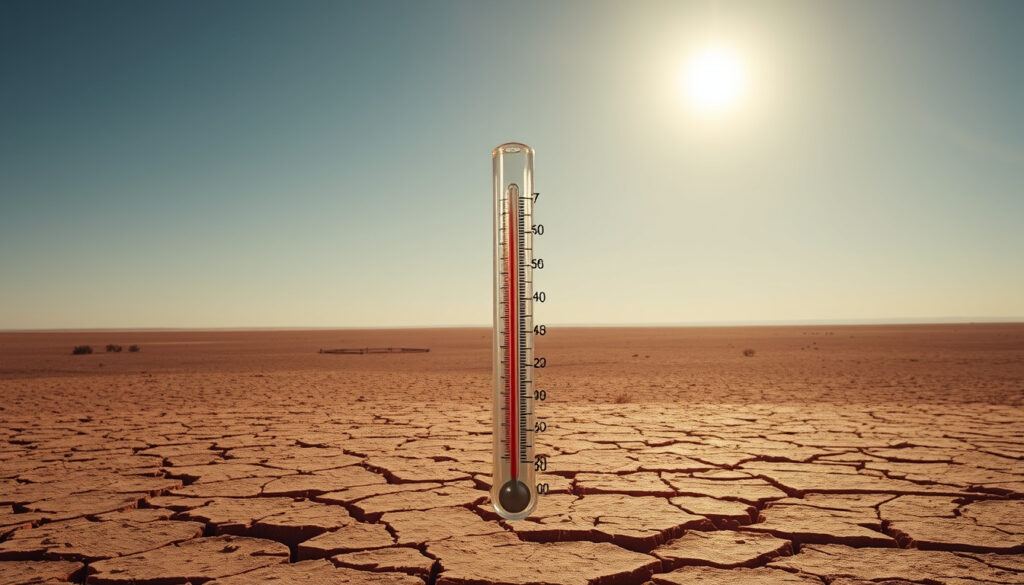
Australia Heatwave 40C Forecast: January 2026 Temperatures
Australia is bracing for its most intense heatwave in six years, with temperatures forecast to climb past 45°C across four states, as the Bureau of Meteorology warns that the January 2026 event could break records. Here’s what you need to know about the heatwave, how it compares to past extremes, and how to stay safe.
Highest ever temperature in Australia: 50.7°C ·
Current forecast peak: 45°C ·
States under heatwave warning: NSW, VIC, SA, WA ·
Duration of current heatwave: Multiple days from 3 Jan 2026 ·
Previous significant heatwave: 2019–2020 summer
Quick snapshot
- BoM forecasts 40-45°C in NSW, VIC, SA, WA (BoM severe weather update)
- Heatwave is the most significant in six years (ABC News)
- El Niño conditions are present (BoM severe weather update)
- Exact peak temperature for each location
- Duration beyond the current week
- Whether records will be broken
- Heatwave began 3 Jan 2026 in Western Australia (Bureau of Meteorology)
- Peak expected 6 Jan 2026 in southern states (Bureau of Meteorology)
- Warnings extended through the week (Bureau of Meteorology)
- El Niño may persist into summer (SBS News)
- Fire danger extreme in SA, VIC, NSW (Bureau of Meteorology)
- Health warnings remain active (Department of Health)
The table below provides a quick reference for key metrics.
| Metric | Value |
|---|---|
| Highest temperature | 50.7°C |
| Current forecast peak | 45°C |
| Affected states | NSW, VIC, SA, WA |
| Heatwave start date | 3 January 2026 |
| El Niño outlook | Potentially strongest on record |
What temperature is a heatwave in Australia?
What is the Bureau of Meteorology’s heatwave definition?
- BoM defines a heatwave as three consecutive days of high maximum and minimum temperatures that are unusual for that location (Bureau of Meteorology severe weather update).
- The official heatwave service runs from October to March.
A heatwave doesn’t need to hit 40°C — it’s relative to the local climate. For example, a 35°C day in Tasmania can be a heatwave, while 40°C in inland Australia is more common.
How is heatwave severity classified?
- Severe: Prolonged hot conditions that can affect vulnerable people.
- Extreme: Very hot conditions that can affect anyone, including healthy people (News.com.au heatwave classification).
The current event includes extreme heatwave areas through parts of northern Victoria, NSW, and southern Queensland.
The implication: The extreme rating underscores the need for immediate preparedness across affected regions.
What’s the hottest it’s ever got in Australia?
Five locations, one number: 50.7°C. That’s the record-high temperature shared by Oodnadatta (South Australia, 2 January 1960) and Onslow (Western Australia, 13 January 2022).
What is the highest recorded temperature in Australia?
- Oodnadatta recorded 50.7°C on 2 January 1960 (Bureau of Meteorology climate records).
- Onslow tied that record on 13 January 2022.
Has any place reached 50 degrees Celsius?
- Yes — multiple locations have exceeded 50°C, including Mardie (50.5°C) and Emu Creek (50.2°C).
- Extreme temperatures are becoming more frequent due to climate change (ABC News analysis).
Australia’s all-time record has stood for over six decades, but the gap is narrowing. With this week’s forecast of 45°C+ across the southeast, the question is not if but when that 50.7°C mark will fall again.
The pattern: Record temperatures are becoming more common, and this heatwave brings us closer to a potential new national high.
Is summer 2026 going to be hot in Australia?
The El Niño pattern driving the current heatwave is shaping up to be one of the strongest on record, according to early forecasts.
What is the El Niño forecast for 2026?
- The Bureau of Meteorology and international climate models indicate El Niño conditions are present and likely to persist (BoM severe weather update).
- Some models suggest this could be one of the strongest El Niño events in recent decades (News.com.au).
How does El Niño affect Australian summers?
- El Niño typically brings hotter and drier conditions to eastern Australia.
- It increases the likelihood of heatwaves, drought, and bushfires.
- The current heatwave in January 2026 is part of this pattern (Bureau of Meteorology).
El Niño doesn’t guarantee every summer will be a scorcher — but the signals for 2026 are strong. For farmers and energy grid operators, the outlook means preparing for sustained heat and potential load-shedding events.
The catch: Strong El Niño signals require proactive planning for energy and agriculture sectors.
What is the silent killer in Australia?
Heat kills more Australians each year than bushfires, floods, and storms combined — yet it rarely makes headlines until it’s too late.
Why is heat called a silent killer?
- Heat stress can escalate to heatstroke without obvious warning signs.
- Vulnerable groups include the elderly, infants, and outdoor workers (Australian Department of Health heat stress guidance).
- Symptoms of heat exhaustion include headache, nausea, dizziness, and confusion.
What are the health risks of heatwaves in Australia?
- Heatstroke can cause organ failure and death if untreated.
- Even mild heat stress reduces workplace productivity and increases accident risk.
- During the 2019–2020 summer, excess heat-related deaths were estimated in the hundreds (ABS mortality data).
The consequence: Without action, heat-related deaths and illnesses will rise during extreme events.
What is the Australia heatwave 40c forecast?
The Bureau of Meteorology has issued severe and extreme heatwave warnings across most of South Australia, much of New South Wales, northern Victoria, and parts of Western Australia.
Which states are expected to reach 40°C?
- Adelaide is forecast to reach 45°C on Australia Day, which would be the hottest Australia Day on record (BoM Australia Day update).
- Melbourne is heading for 40°C, possibly 41°C (SBS News).
- Port Augusta could hit 48°C, and Broken Hill 47°C.
- Many inland NSW towns face record-breaking temperatures on Wednesday (BoM timeline).
What is the latest forecast from the Bureau of Meteorology?
- The heatwave is “very long-lasting” with warnings lingering through the week (SBS News).
- Widespread Heatwave Warnings and Severe Heatwave Warnings are in place across most of South Australia, much of New South Wales, and northern Victoria.
- Warnings will extend to parts of southern Victoria over the weekend and into next week.
How long will the heatwave last?
- The heat began on 3 January 2026 in Western Australia and spread east.
- Peak temperatures are expected on 6 January 2026, but the heat will linger into Thursday (News.com.au timeline).
- Extreme fire danger is forecast for south-eastern South Australia, western Victoria, and central parts of Victoria, including the metropolitan area.
Timeline of key events
Six moments that chart Australia’s heatwave history and the current event.
- – Oodnadatta records 50.7°C – Australia’s hottest day (BoM records).
- – Onslow ties 50.7°C record.
- – Heatwave begins in Western Australia.
- – Heatwave expands to four states; ABC calls it “most significant in six years” (ABC News).
- – Peak temperatures expected in southern states.
- – Adelaide forecast 45°C (potential hottest Australia Day) (Bureau of Meteorology).
Clarity check
Confirmed facts
- BoM forecasts 40-45°C in NSW, VIC, SA, WA (BoM)
- Heatwave is the most significant in six years (ABC News)
- El Niño conditions are present (BoM)
What’s unclear
- Exact peak temperature for each location
- Duration beyond the current week
- Whether records will be broken
Voices from the heatwave
“This is the most significant heatwave in six years, with temperatures expected to exceed 45°C in some areas.”
– BoM spokesperson, via ABC News
“Millions to swelter in heatwave as temperatures tip past 40C.”
– News.com.au report
“BoM forecasts 40C temperatures in NSW, Victoria, South Australia, and Western Australia early this week.”
– SBS News
The implications of this heatwave go beyond discomfort. For the energy sector, record demand could strain the grid; for health services, emergency rooms may see a surge in heat-related admissions. For the millions living in affected states, the choice is clear: plan ahead, stay cool, and check on those who are most vulnerable, or face a week that could push Australia’s resilience to its limits.
BoM har utfärdat allvarliga varningar för NSW, VIC, SA och WA då den 4 000 km långa värmeböljan fortsätter att slå temperaturrekord.
Frequently asked questions
How can I stay safe during a heatwave?
Stay hydrated, avoid the sun between 11am and 3pm, use air conditioning or seek cool public spaces, and never leave children or pets in parked cars (Australian Department of Health).
What should I do if I experience heatstroke?
Call 000 immediately. Move the person to a cool place, apply cool water to their skin, and fan them. Do not give fluids if they are unconscious.
Does everyone in Australia have air conditioning?
No. In 2025, about 80% of homes had some form of cooling, but many rental properties and low-income households lack adequate air conditioning (ABS housing data).
How does a heatwave affect the power grid?
High demand for air conditioning can cause blackouts. The Australian Energy Market Operator (AEMO) has warned of potential load-shedding if demand exceeds supply (AEMO).
Are there any heatwave warnings for Queensland today?
As of the latest BoM update, extreme heatwave conditions extend into southern Queensland, but warnings may change rapidly. Check the BoM website for current alerts.
What is the forecast for Sydney in the coming days?
Sydney is expected to reach the high 30s to low 40s, with warmer conditions inland. The BoM advises staying updated via its forecast page (BoM Sydney forecast).
How does El Niño affect the likelihood of heatwaves?
El Niño increases the probability of hot, dry weather in eastern Australia, raising the risk of prolonged heatwaves. The current event is consistent with this pattern.
More related posts
 Aaron Pedersen: Biography, Heritage, and Career Highlights
 Steffi Graf Today: Where She Lives, Net Worth, and Life Now
 The Last Kingdom – Complete Guide to Seasons, Cast and Sequel
 Peta Credlin: Career, Husband, Religion, Health Updates
 Office Desk Ireland: Best Options from IKEA, JYSK & More
 Brian Thompson Shooting: UnitedHealthcare CEO Killed in Midtown Manhattan
 Kendrick Lamar: Biography, Music, Relationships, and Views
