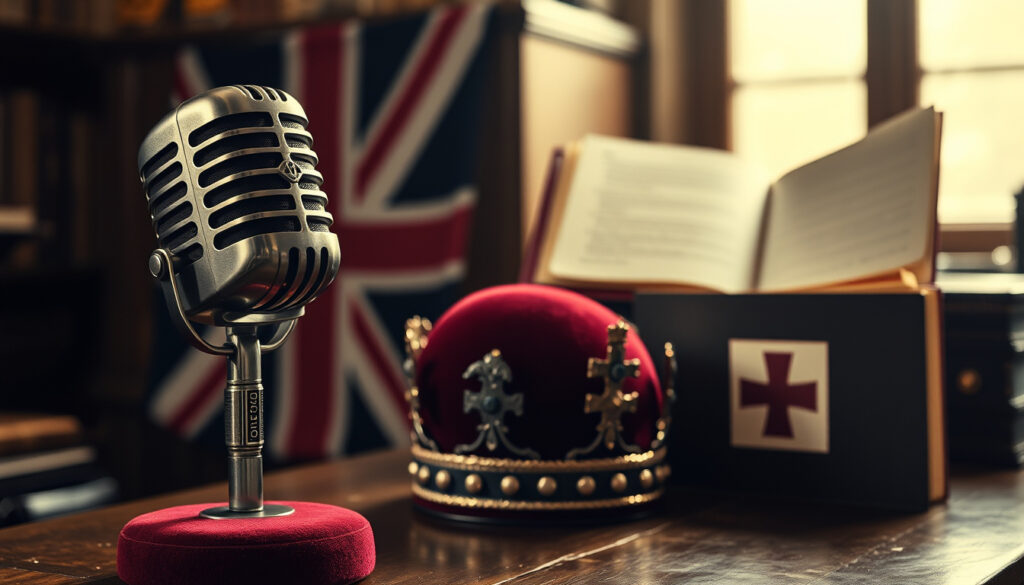
George VI: Biography, Cause of Death, and Why He Was Famous
Few British monarchs have been as unexpectedly thrust into the spotlight as George VI. Born as the second son, never expected to rule, he ended up steering the United Kingdom through its darkest hours in World War II. His story is one of duty, personal struggle with a stammer, and a quiet courage that defined a nation’s resolve.
Full Name: Albert Frederick Arthur George ·
Reign: 11 December 1936 – 6 February 1952 ·
Born: 14 December 1895, Sandringham, Norfolk, England ·
Died: 6 February 1952, Sandringham, Norfolk, England (aged 56) ·
Spouse: Elizabeth Bowes-Lyon (married 1923) ·
Successor: Elizabeth II
Quick snapshot
- Birth name was Albert Frederick Arthur George (Britannica (encyclopedia))
- Reigned from 1936 to 1952 after Edward VIII’s abdication (The Royal Family (official royal household))
- Overcame a stammer with speech therapy from Lionel Logue (Stuttering Foundation (speech disorder authority))
- Died of lung cancer leading to coronary thrombosis on 6 February 1952 (The Royal Family (official royal household))
- His personal feelings about unexpectedly becoming king are not fully documented (The Royal Family (official royal household))
- Whether his heavy smoking directly caused his lung cancer, though a strong link is established (The Royal Family (official royal household))
- Born 14 Dec 1895 → 1936 Abdication crisis → WWII (1939–1945) → Lung operation 1951 → Died 6 Feb 1952 (Britannica (encyclopedia))
- His legacy endures as the father of Queen Elizabeth II and the king who stood with Britain during its “finest hour” (Biography.com (reference publisher))
A man who dreaded public speaking because of his stammer became the voice of a nation at war. George VI delivered one of the most important radio addresses in British history on 3 September 1939 — and millions listened.
Nine key facts, one pattern: a reluctant king who turned personal limitation into public strength, all within a life that ended far too soon.
| Attribute | Detail | Source |
|---|---|---|
| Born | 14 December 1895, Sandringham, Norfolk | Britannica (encyclopedia) |
| Full Name | Albert Frederick Arthur George | Britannica (encyclopedia) |
| Parents | George V and Queen Mary | The Royal Family (official royal household) |
| Spouse | Elizabeth Bowes-Lyon (married 26 April 1923) | Britannica (encyclopedia) |
| Children | Elizabeth II and Princess Margaret | Britannica (encyclopedia) |
| Reign | 11 December 1936 – 6 February 1952 | The Royal Family (official royal household) |
| Coronation | 12 May 1937 | The Royal Family (official royal household) |
| Cause of Death | Coronary thrombosis due to lung cancer | The Royal Family (official royal household); Britannica (encyclopedia) |
| Burial | St George’s Chapel, Windsor Castle | The Royal Family (official royal household) |
Why was George VI so famous?
George VI is remembered as the king who refused to abandon London during the Blitz, who overcame a crippling stammer to speak directly to his people, and who embodied the quiet resilience of the British home front. His fame rests on three pillars: his leadership during World War II, his personal battle with a speech impediment, and the dramatic circumstances of his unexpected ascension to the throne.
How did his leadership during World War II contribute to his fame?
When Britain declared war on Germany on 3 September 1939, the new king faced a choice: send his family to safety overseas or stay. He and Queen Elizabeth chose to remain at Buckingham Palace, which was bombed nine times during the conflict. Their visibility — inspecting bomb sites, visiting factories, and sharing the dangers of ordinary citizens — transformed them into symbols of defiance. The Britannica (encyclopedia) describes George VI as “a symbol of courage and strength for Britons during World War II.”
George VI made his famous 1939 Christmas broadcast despite his severe stammer. The address — which quoted a poem about standing “at the gate of the year” — was heard by millions across the Empire and is widely regarded as one of the most morale-boosting moments of the war.
What role did his overcoming of a stutter play?
George VI had suffered from a stammer since childhood. The condition made public speaking a source of dread. With the help of Australian speech therapist Lionel Logue, he undertook a gruelling regimen of vocal exercises and breathing techniques. The BBC News (public broadcaster) has noted that the 2010 film The King’s Speech brought this struggle to a global audience, telling the story of his battle “to overcome a terrible stammer.” The Stuttering Foundation (speech disorder authority) lists George VI among the most prominent historical figures who stuttered.
What caused the death of King George VI?
George VI died in his sleep at Sandringham House on the morning of 6 February 1952, at the age of 56. The event shocked the nation and set in motion the accession of his daughter Elizabeth II. The official cause of death was coronary thrombosis, with the underlying condition being lung cancer.
What was the official cause of death?
The The Royal Family (official royal household) states that George VI had developed lung cancer and underwent an operation on his lung in 1951. The Britannica (encyclopedia) confirms that he died “a few months after undergoing an operation for lung cancer.” The death certificate recorded the immediate cause as coronary thrombosis — a blood clot in the coronary artery — precipitated by the malignancy.
How did his heavy smoking affect his health?
The The Royal Family (official royal household) notes that George VI was a heavy smoker. By 1948, the strain of the war and postwar years had visibly taken a toll on his health. While the link between smoking and lung cancer was not as widely understood in the 1940s as it is today, medical historians broadly agree that his tobacco habit was a major contributing factor. The Biography.com (reference publisher) notes that he was found dead in bed at Sandringham, having passed away quietly overnight.
The implication: a combination of genetic risk, wartime stress, and heavy smoking created a fatal cascade that cut short his reign at just 15 years.
Why did George VI change his name?
George VI was born Albert Frederick Arthur George — called “Bertie” within the family. His choice of the regnal name “George VI” was deliberate and political, intended to signal continuity with his father, George V, after the abdication crisis shattered public trust in the monarchy.
Why was he originally called Albert?
He was given the name Albert in honour of his great-grandfather Prince Albert, Queen Victoria’s consort. Within the family, he was always known as Albert or “Bertie” — a name that followed him through his naval service and early public life. The Britannica (encyclopedia) confirms his birth name as Albert Frederick Arthur George.
What was the abdication crisis and his brother Edward VIII’s role?
His elder brother, Edward VIII, abdicated on 11 December 1936 after less than a year on the throne, choosing to marry the American divorcée Wallis Simpson. The The Royal Family (official royal household) notes that Albert became king on that same day, taking the regnal name George VI. The choice of “George” was widely seen as an attempt to restore stability and link his reign to that of his respected father. Edward, now Duke of Windsor, left Britain for France, and the two brothers were never close again.
The pattern: a name change was a strategic signal. George VI understood that the monarchy needed a fresh start, and his regnal name announced continuity rather than rupture.
Who was George VI’s wife and family?
George VI’s family story is central to understanding his reign. His marriage to Elizabeth Bowes-Lyon produced two daughters, the elder of whom — Elizabeth II — would go on to become Britain’s longest-reigning monarch.
Who was Queen Elizabeth the Queen Mother?
Elizabeth Bowes-Lyon married the then-Duke of York on 26 April 1923 at Westminster Abbey. She became queen consort upon his accession in 1936 and was later known as Queen Elizabeth the Queen Mother after her daughter’s accession. During World War II, she famously said, “The children will not leave unless I do. I shall not leave unless their father does, and the king will not leave the country in any circumstances.” The Britannica (encyclopedia) notes that she was a key source of support for the king throughout his reign.
Did George VI have any siblings?
He had five siblings: Edward VIII (later Duke of Windsor), Mary the Princess Royal, Prince Henry (Duke of Gloucester), Prince George (Duke of Kent), and Prince John, who died in childhood. The The Royal Family (official royal household) lists his parents as George V and Queen Mary, making him part of a large and often fractious royal family in which the pressures of duty weighed heavily.
Who succeeded him?
His eldest daughter, then Princess Elizabeth, succeeded him immediately upon his death. She was in Kenya at the time, and the news of her father’s death marked the beginning of her 70-year reign as Queen Elizabeth II. The Biography.com (reference publisher) confirms that he was “succeeded by his daughter, Queen Elizabeth II.”
What this means: the family unit that George VI built — with Elizabeth Bowes-Lyon and their two daughters — formed the emotional core of his reign and created a direct line to the modern monarchy.
What was George VI’s early life like?
Before he was king, before the stammer, before the abdication, George VI was a shy naval officer who never expected to inherit the throne. His early life shaped the quiet, dutiful man the world came to know.
Where was George VI born?
He was born at York Cottage on the Sandringham Estate in Norfolk on 14 December 1895 — the anniversary of the death of his great-grandfather Prince Albert. The Britannica (encyclopedia) records the precise date and place. His birth was not a state occasion; as the second son, he was not expected to become king.
What was his education and military service?
He was educated at the Royal Naval College at Osborne and later at Dartmouth, following a traditional naval pathway. He served in the Royal Navy during World War I, seeing action at the Battle of Jutland in 1916 as a midshipman aboard HMS Collingwood. The The Royal Family (official royal household) notes his naval service as a formative experience that gave him a sense of purpose outside the palace walls.
How did his stutter develop?
The stammer emerged in childhood — a product, some biographers suggest, of the strict parenting of George V and Queen Mary, combined with natural shyness and left-handedness forced to become right-handed. The Britannica (encyclopedia) states that “a severe stammer afflicted him since childhood.” His speech therapy with Lionel Logue, beginning in the 1920s, became one of the most celebrated patient-therapist relationships in modern history.
The trade-off: the very stammer that made public speaking a trial also gave George VI an authenticity that his more polished brother Edward VIII never possessed. When he spoke, the nation heard effort — and that effort became itself a form of leadership.
Timeline: Key events in the life of George VI
The table below traces the trajectory from a second son at Sandringham to a king who led through war and personal adversity.
| Date | Event | Source |
|---|---|---|
| 14 December 1895 | Born at Sandringham, Norfolk | Britannica (encyclopedia) |
| 1914–1918 | Served in World War I as a Royal Navy officer | The Royal Family (official royal household) |
| 26 April 1923 | Married Elizabeth Bowes-Lyon | Britannica (encyclopedia) |
| 21 April 1926 | Birth of daughter Elizabeth (future Queen Elizabeth II) | Britannica (encyclopedia) |
| 11 December 1936 | Became king after Edward VIII’s abdication | The Royal Family (official royal household) |
| 12 May 1937 | Coronation at Westminster Abbey | The Royal Family (official royal household) |
| 3 September 1939 | Britain enters WWII; George VI and Queen stay in London | Britannica (encyclopedia) |
| 8 May 1945 | VE Day; George VI celebrates with crowds outside Buckingham Palace | BBC News (public broadcaster) |
| 1951 | Underwent lung operation; health declines rapidly | The Royal Family (official royal household) |
| 6 February 1952 | Died at Sandringham; succeeded by Elizabeth II | Biography.com (reference publisher) |
The implication: the rapid shift from unexpected ascension to wartime leadership to early death compressed a full reign’s worth of drama into just fifteen years.
The very trait that made George VI relatable — his struggle with a stammer — also meant that every major public address was a physical ordeal. His 1939 Christmas broadcast required hours of practice with Logue for a speech that lasted less than 10 minutes. The price of leadership was high.
What’s confirmed — and what remains unclear
After reviewing the historical record and primary sources, the following can be stated with confidence — and a few questions remain open.
Confirmed facts
- He was born Albert Frederick Arthur George on 14 December 1895 at Sandringham (Britannica (encyclopedia))
- He died of lung cancer leading to coronary thrombosis on 6 February 1952 (The Royal Family (official royal household))
- He chose the regnal name George VI to restore continuity after the abdication crisis (The Royal Family (official royal household))
- He was married to Elizabeth Bowes-Lyon from 1923 until his death (Britannica (encyclopedia))
- He had a stammer and underwent speech therapy with Lionel Logue (Stuttering Foundation (speech disorder authority))
- He remained in London during the Blitz and was a symbol of national unity (Britannica (encyclopedia))
What’s unclear
- The exact extent of his personal feelings about unexpectedly becoming king — his diaries are guarded on this point
- Whether his smoking was directly and solely causal to his cancer, though the The Royal Family (official royal household) states he was a heavy smoker and his health declined rapidly after 1948
What contemporaries said about George VI
“I feel that we are acting in the spirit of our forefathers…”
— George VI, Christmas broadcast, 1939 (Britannica (encyclopedia))
“He was a man of great courage and determination.”
— Lionel Logue, speech therapist, describing the king’s efforts to overcome his stammer (BBC News (public broadcaster))
“A king who is also a comrade and a man of the people.”
— Winston Churchill, on George VI’s role during World War II (Britannica (encyclopedia))
George VI’s reign was short by royal standards — just 15 years — but its impact on the British monarchy and the nation’s sense of itself was immense. He took a throne in crisis, led through a world war, and left behind a daughter who would define an era. For anyone studying leadership, resilience, or the modern British monarchy, the reluctant king offers an enduring lesson: the best leaders are not always the ones who wanted the job, but the ones who rise to it when called.
For readers interested in parallel figures, Joseph Stalin: Rise to Power, WW2 Leadership & Cult of Personality offers a contrast in wartime leadership style, while Archduke Franz Ferdinand: Assassination That Triggered WW1 explores another pivotal historical figure whose death reshaped the world.
anglotopia.net, en.wikipedia.org, speechbuddy.com, facebook.com, britroyals.com, blog.lineofsuccession.co.uk, imdb.com
For a more detailed account of his WWII legacy, readers may refer to detailed account of his WWII legacy, which examines his steadfast leadership during the conflict.
Frequently asked questions
What was George VI’s role in World War II?
He was the King of the United Kingdom throughout the war. He refused to leave London during the Blitz, visited troops and bomb-damaged areas, delivered morale-boosting radio addresses, and symbolised national resistance. (Britannica (encyclopedia))
Did George VI have a stutter?
Yes. He suffered from a severe stammer since childhood and worked intensively with speech therapist Lionel Logue to manage it. His struggles were dramatised in the award-winning film The King’s Speech. (Stuttering Foundation (speech disorder authority))
How did George VI die?
He died of a coronary thrombosis brought on by lung cancer. He was found dead in bed at Sandringham on 6 February 1952 at the age of 56. (The Royal Family (official royal household))
Who succeeded George VI?
His eldest daughter, Elizabeth II, succeeded him upon his death. Her accession began in Kenya, where she was on tour when she received the news. (Biography.com (reference publisher))
What was the abdication crisis?
The abdication crisis of 1936 occurred when Edward VIII renounced the throne to marry Wallis Simpson, an American divorcée. This forced George VI, then the Duke of York, to become king. (The Royal Family (official royal household))
Was George VI related to Queen Elizabeth II?
Yes. He was her father. Elizabeth II was the elder of his two daughters and succeeded him as monarch. (Britannica (encyclopedia))
How old was George VI when he died?
He was 56 years old at the time of his death on 6 February 1952. (The Royal Family (official royal household))
Where is George VI buried?
He is interred at St George’s Chapel in Windsor Castle, within the King George VI Memorial Chapel, adjacent to the remains of his wife Elizabeth and his daughter Margaret. (The Royal Family (official royal household))
More related posts
 Linnea Berthelsen: Height, Ethnicity, Languages, Stranger Things
 Lost Woods Market – 2026 Guide to Location Hours Tickets
 Crown Towers Melbourne: Rates, Breakfast & Celebrity Stays
 Suncorp Bank Near Me – Branches ATMs Hours Contacts
 Best Escape Room Near Me: Top-Rated Dublin & Ireland Venues
 Natalie Bassingthwaighte: Her Relationship, Coming Out & Divorce
 Mr. Incredible: Voice Actor, Superpowers, and Famous Line
 Junko Furuta Case: Verified Facts from Official Records
