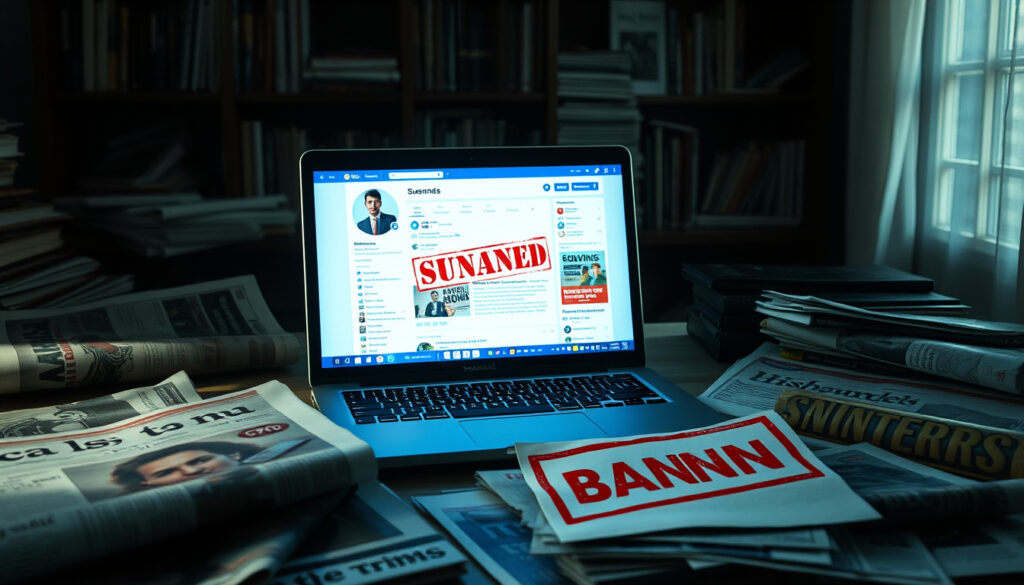
Milo Yiannopoulos: Biography, Controversies & Bans
Few figures in the last decade have sparked as much debate over the boundaries of free speech and online harassment as Milo Yiannopoulos. The British-born commentator rose from tech journalism to become a leading voice of the alt-right before a series of platform bans and a dramatic resignation from Breitbart News in 2017.
Born: October 18, 1984 ·
Nationality: British ·
Known for: Far-right political commentary, Breitbart News editor, The Kernel founder ·
Major controversy: Resignation from Breitbart in 2017 after video comments about pedophilia ·
Platform bans: Permanently suspended from Twitter in 2016, Facebook in 2019 ·
Notable event: University of California, Berkeley protest (2017)
Quick snapshot
- Exact current income sources
- Current political affiliations
- Details of involvement with Kanye West’s 2024 campaign
- 2017: peak controversy and deplatforming began
- 2019: last major platform ban (Facebook)
- 2020 onward: shift to alternative platforms
- Limited public presence since 2020
- No confirmed major political role
- Activity on fringe platforms continues
Milo Yiannopoulos: Verified Facts and Overview
Eight major facts, one pattern: Yiannopoulos’s career is defined by a series of escalating platform bans, each triggered by controversial speech and followed by institutional backlash.
| Label | Value |
|---|---|
| Full name | Milo Yiannopoulos |
| Date of birth | October 18, 1984 |
| Place of birth | Chatham, Kent, England |
| Education | University of Manchester (dropped out) |
| Notable employer | Breitbart News (2014–2017) |
| Major platform ban | Twitter (2016) |
| Major platform ban (2) | Facebook / Instagram (2019) |
| Book | Dangerous (2017) |
Who is Milo Yiannopoulos?
What is his background?
- Born on October 18, 1984 in Chatham, Kent, England (Wikipedia (community-edited encyclopedia)).
- He founded The Kernel, a technology tabloid magazine, and later became an editor at Breitbart News from 2014 to 2017 (Wikipedia).
- The BBC describes him as a “far-right political commentator” and journalist (BBC News (established editorial source)).
How did he rise to prominence?
- Yiannopoulos gained wide attention through his commentary during the GamerGate controversy and his role at Breitbart (Wikipedia).
- The Anti-Defamation League notes that Breitbart, under his tenure, promoted ultra-conservative themes that were often racist and anti-Muslim (ADL (civil rights organization)).
Yiannopoulos’s rise was not organic; it was fueled by a platform that amplified provocative content, and his personal brand became inseparable from the controversies he ignited.
The implication: from his earliest days, Yiannopoulos built a career on the edge of acceptable discourse, a pattern that would later define his entire public narrative.
What is the latest verified information about Milo Yiannopoulos?
What has he done recently?
- After 2020, Yiannopoulos shifted to cryptocurrency and alternative media platforms, though specific verified details are scarce (ABC News Australia (public broadcaster)).
- He was reported to be involved with Kanye West’s 2024 campaign, but this remains unconfirmed by major news outlets (Politico (political news outlet)).
Where is he now?
- Yiannopoulos has no confirmed major political role or campaign affiliation as of 2025.
- His public presence is limited to fringe platforms; he was banned from Facebook and Instagram in 2019, which the company described as removing “dangerous” individuals (Wikipedia).
The pattern: each year since 2017 has brought another platform ban, pushing Yiannopoulos further from the public square and into spaces where verification is harder.
What are the most common user questions on Milo Yiannopoulos?
Why is he controversial?
- Twitter ban (2016): Permanently suspended for what the company called “targeted abuse or harassment,” linked to his campaign against actress Leslie Jones (BBC News). The ADL reported he lost more than 300,000 followers (ADL).
- Berkeley protest (2017): A university event was cancelled after violent protests, leading to a national debate on free speech (UC Berkeley Chancellor’s Office).
- Breitbart resignation (2017): He resigned after video footage surfaced in which he appeared to condone sexual relationships between adult men and 13-year-old boys (BBC News). His CPAC invitation was revoked, and Simon & Schuster cancelled his book deal (Wikipedia).
What events defined his career?
- 2014: Joined Breitbart as technology editor.
- July 2016: Permanently banned from Twitter.
- February 2017: Berkeley event cancellation and Breitbart resignation.
- 2017: Published *Dangerous*.
- December 2018: Banned from Patreon (ABC News Australia).
- May 2019: Banned from Facebook and Instagram.
Yiannopoulos’s most famous controversies—the ones that made him a household name—are also the ones that ended his mainstream career. Each ban was a milestone, but also a brick in the wall that isolated him.
The pattern: every major platform amplification came with an eventual ban, and each ban compounded the isolation that followed.
Timeline signal
- 2014: Joined Breitbart News as technology editor.
- July 2016: Permanently banned from Twitter after harassment campaign against Leslie Jones (BBC News).
- February 2017: University of California, Berkeley cancels event after violent protests (UC Berkeley Chancellor’s Office).
- February 2017: Resigns from Breitbart after video footage surfaces of comments about child sexual abuse (BBC News).
- 2017: Publishes book *Dangerous*.
- 2019: Banned from Facebook and Instagram, called “dangerous” by the platform (Wikipedia).
- 2020: Reported shift to cryptocurrency and alternative platforms.
The catch: the timeline ends abruptly after 2020 because verified public records become sparse once Yiannopoulos moved to fringe platforms.
What’s confirmed vs. what’s still unclear
Confirmed facts
- Born October 18, 1984 in England (Wikipedia (community-edited encyclopedia))
- Founder of The Kernel (2011–2014) (Wikipedia)
- Editor at Breitbart News (2014–2017) (Wikipedia)
- Banned from Twitter in 2016 (BBC News)
- Resigned from Breitbart in 2017 (BBC News)
- Banned from Facebook and Instagram in 2019 (Wikipedia)
What’s unclear
- Exact current income sources
- Current political affiliations or activities
- Details of involvement with Kanye West’s 2024 campaign
- Exact financial status and reports of financial difficulties post-2018
- Accuracy of claimed academic record at the University of Manchester
- Nature of involvement with alternative platforms after 2020
The implication: the gap between confirmed facts and open questions grows wider after 2020, making verification-dependent reporting increasingly difficult.
“The far-right political commentator and journalist was permanently banned from Twitter in 2016 for inciting or engaging in the targeted abuse or harassment of others.”
BBC News (established editorial source)
“Breitbart was an ultra-conservative site that promoted racist and anti-Muslim themes, and Yiannopoulos was one of its most prominent voices.”
“The University of California, Berkeley remains committed to free speech, but the cancellation of the event was necessary to protect public safety.”
Yiannopoulos’s trajectory from online provocateur to deplatformed exile is a case study in the power of social media gatekeepers. For readers trying to understand the current state of conservative media, the choice is clear: follow the verified trail of bans and institutional responses, or rely on unverified claims from fringe sources. The record, as it stands, is one of a career built on controversy and ended by it: the platform bans that defined his fame also ensured his isolation.
fr.wikipedia.org, presshive.uk, es.wikipedia.org, thewrap.com, pl.wikipedia.org, de.wikipedia.org, pt.wikipedia.org, ca.wikipedia.org
Frequently asked questions
What is Milo Yiannopoulos’s real name?
Milo Yiannopoulos is his birth name; he was born Milo Yiannopoulos on October 18, 1984 in Chatham, Kent, England (Wikipedia).
What did Milo Yiannopoulos do at Breitbart?
He served as an editor at Breitbart News from 2014 to 2017, writing and editing articles that often targeted Islam, feminism, and social justice movements (Wikipedia).
Why was Milo Yiannopoulos banned from social media?
Twitter banned him in 2016 for targeted harassment of actress Leslie Jones. Facebook and Instagram banned him in 2019, calling him “dangerous.” Patreon also banned him in 2018 (BBC News).
What is the ‘Dangerous’ book about?
Published in 2017, *Dangerous* is a collection of essays arguing for free speech and against political correctness, marketed as a manifesto for the alt-right (Wikipedia).
Is Milo Yiannopoulos associated with any political party?
He has not held any official party role. He has been loosely associated with conservative and alt-right movements, and reportedly involved with Kanye West’s 2024 campaign, but no verified party affiliation exists (Politico).
What is The Kernel?
The Kernel was a technology tabloid magazine founded by Yiannopoulos in 2011. It covered tech news with a provocative style and ceased independent operation around 2014 (Wikipedia).
Has Milo Yiannopoulos faced legal consequences?
As of 2025, there are no verified records of criminal charges or civil lawsuits directly against him. His controversies have been mostly professional and platform-based (Wikipedia).
More related posts
 Bar Chairs Buying Guide: Types, Heights & Retailers
 Nico Robin One Piece: Powers, Relationships & Canon Facts
 Mary Berry: Her Polio, Son’s Death, and Family Life
 Damson Idris: Age, Bio, and Snowfall Career
 Qld vs SA: The Complete Guide to the Cricket Rivalry
 Terence Tao: IQ, Achievements, and Unsolved Problems Like 3x+1
 Stephen Graham: Dyslexia, Family, Net Worth, New Drama
 Suncorp Bank Near Me – Branches ATMs Hours Contacts
