Everest Base Camp Trek: Difficulty, Altitude, & Beginner Guide
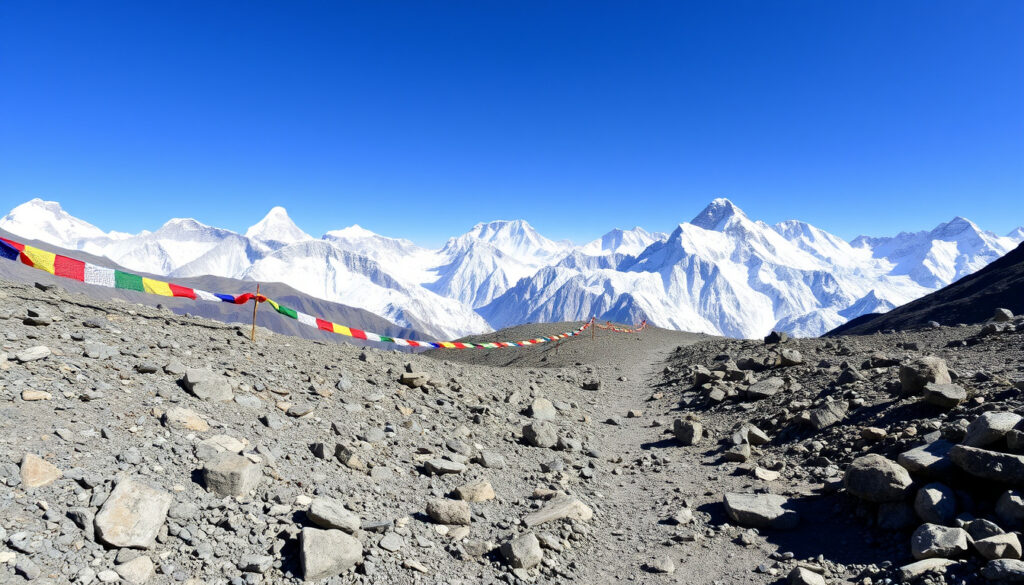
You’ve seen the photos — prayer flags, icy peaks, that famous sign. But what’s it really like to walk to the foot of the world’s tallest mountain? The Everest Base Camp trek is a 12- to 16-day journey from Lukla to an elevation of 5,364 meters, a route that demands stamina but not technical climbing skills. Whether you’re a first-timer or a seasoned hiker, the main challenge here is altitude, not ice axes.
Everest Base Camp Elevation: 5,364 m (17,598 ft) (Lonely Planet travel guide) ·
Standard Trek Duration: 12–16 days (Nepal Tourism Board) ·
Altitude Gain from Lukla: 2,860 m (9,383 ft) (Himalayan Recreation trekking company)
Quick snapshot
- Everest Base Camp (South) sits at 5,364 m (Lonely Planet travel guide)
- Trekkers do not need technical climbing gear (Nepal Hiking Team operator)
- The standard trek lasts about 14 days (Nepal Tourism Board)
- Exact annual number of trekkers who fail to reach Base Camp
- Long-term health effects of repeated altitude exposure on porters
- Precise success-rate difference between guided and independent trekkers
- Standard itineraries include 2 acclimatisation days at Namche Bazaar and Dingboche (Nepal Hiking Team operator)
- Permit systems and environmental regulations are tightening as trekker numbers grow (Nepal Tourism Board)
The pattern: altitude is the dominant variable that governs every other aspect of this trek.
| Specification | Value | Source |
|---|---|---|
| Base Camp elevation | 5,364 m (17,598 ft) | Lonely Planet travel guide |
| Lukla elevation (start point) | 2,860 m (9,383 ft) | Lonely Planet travel guide |
| Standard duration | ~14 days | Nepal Tourism Board |
| Daily walking time | 5–8 hours | Discovery World Trekking operator |
| Altitude gain (Lukla to Base Camp) | ~2,500 m | Himalayan Recreation trekking company |
| Difficulty classification | Moderate to strenuous, non‑technical | Nepal Hiking Team operator |
How hard is it to climb to Everest Base Camp?
Physical demands
- Daily walking 5–8 hours over steep, rocky terrain (Discovery World Trekking operator)
- Total elevation gain exceeds 2,500 m from Lukla (Himalayan Recreation trekking company)
- No technical climbing required — no ropes, crampons, or ice axes (Nepal Hiking Team operator)
The trek is a long, sustained walk at altitude, not a climb. The hardest day is usually the push from Namche Bazaar to Tengboche, where the trail steepens and the air thins. As Lonely Planet travel guide notes, the climb to Namche Bazaar from Phakding is a notorious early uphill section. Fatigue accumulates, and pack weight becomes a factor.
The implication: a well-designed training plan targeted at leg strength and cardiovascular endurance is the single most effective preparation a trekker can make.
Mental preparation
- Patience with slow progress is key — altitude forces a plodding pace
- Accepting that summit climbers use the 2pm rule (turn back by 2pm regardless of position) to avoid afternoon storms (Alpine Ramble trekking blog)
- Mental resilience matters more during bad weather days or when symptoms of acute mountain sickness (AMS) appear
The trek is physically demanding but not technically dangerous. The real threat is AMS, which affects 20–40% of trekkers according to high-altitude medicine research (BMJ medical research journal). Knowing when to rest and when to descend separates a successful trek from an evacuation.
Altitude and weather challenges
- Oxygen at Base Camp is about 50% of sea level (Nepal Hiking Team operator)
- Night-time temperatures drop to -20°C (-4°F) (Lonely Planet travel guide)
- Wind chill and afternoon snow squalls are common; proper layering is essential
Can a beginner hike to Everest Base Camp?
Fitness prerequisites
- Most healthy adults with consistent training can complete the trek (Nepal Hiking Team operator)
- No prior hiking experience is mandatory, but it helps (Alpine Ramble trekking blog)
- Cardiovascular endurance and leg strength are the main prerequisites
Beginners often worry about the “climbing” label. In reality, the trail is well‑defined and does not involve scrambling or rope work. As Himalayan Glacier trekking operator notes, first-time high-altitude trekkers with a solid fitness base can succeed.
What this means: a motivated beginner with three months of targeted training has a strong chance of reaching Base Camp.
Recommended training timeline
- Start hiking 3–4 months before departure, with gradual increases in distance and elevation gain
- Include stair‑climbing or incline treadmill work to simulate uphill effort
- Practice carrying a 10–15 kg pack on uneven terrain
- Add weekly long hikes of increasing duration to build endurance
- Rest fully in the final week before departure to allow muscle recovery
Guided vs. independent for beginners
- Guided treks provide logistical support, acclimatisation expertise, and emergency communication (Nepal Hiking Team operator)
- Independent trekkers must arrange permits, lodging, and food along the way
- For beginners, a guided package is strongly recommended by most operators (Alpine Ramble trekking blog)
The cost difference is significant — guided treks range from $1,200 to $5,000 (Discovery World Trekking operator) — but the safety net for a beginner is worth the premium. An unguided solo attempt raises the risk of mismanaging altitude sickness and making route errors.
What elevation is Base Camp Everest?
South Base Camp elevation (Nepal)
- 5,364 m (17,598 ft) above sea level (Lonely Planet travel guide)
- This is the most popular Base Camp for trekkers and commercial expeditions
- Kala Patthar, the nearby viewpoint, rises to 5,545 m (18,192 ft) (Magical Nepal trekking operator)
North Base Camp elevation (Tibet)
- 5,150 m (16,900 ft) – accessed from the Tibetan side
- Requires a Chinese permit and is less commonly attempted by beginners
Comparison with Everest summit
- Summit elevation: 8,848 m (29,029 ft) (Nepal Tourism Board)
- Base Camp sits at roughly 60% of the summit’s altitude, but oxygen at Base Camp is still reduced by half
- The difference in atmospheric pressure means water boils at ~86°C at Base Camp vs. ~68°C at the summit
The pattern: Base Camp sits high enough to stress the body but low enough that most healthy trekkers can adapt within a week. It’s the final staging point for summit teams, but for trekkers it is the destination.
What we know and what’s still uncertain
Confirmed facts
- Everest Base Camp (South) is at 5,364 m
- The trek does not require technical climbing
- Altitude sickness affects a significant portion of trekkers
What remains unclear
- Exact annual number of trekkers who fail to reach Base Camp
- Long-term health effects of repeated altitude exposure on porters
- Precise success-rate difference between guided and independent trekkers
The biggest challenge is altitude and thin air, not technical climbing.
— Discovery World Trekking operator (Nepal trekking operator)
The route along the glacier to base camp can take up to five hours and is described as treacherous ground requiring caution.
— Nepal Tourism Board (government tourist authority)
For anyone planning the Everest Base Camp trek, the decision is clear: prepare for altitude, not ice; hire a guide; and allow two full weeks. A trekker who heads out under‑prepared and suffers AMS faces a helicopter evacuation that costs thousands of dollars and could have been avoided with simple planning.
What is the 2pm rule in Everest climbing?
Turn-back time explained
The 2pm rule is a safety guideline requiring summit aspirants to turn around by 2:00 PM regardless of how close they are to the summit, to avoid dangerous afternoon weather and descents in the dark. (Alpine Ramble trekking blog)
Why it prevents fatalities
Afternoon storms on Everest are common and deadly — wind speeds can spike, visibility can drop to zero, and temperatures can plummet rapidly. The 2pm rule prevents climbers from being caught in these conditions while descending.
Application on Base Camp treks
This rule applies to summit attempts, not to Base Camp trekkers. However, the same principle of turning back early in the day applies to trekkers who feel unwell or face deteriorating weather.
The pattern: the 2pm rule shows how even experienced climbers respect the mountain’s weather patterns — trekkers should adopt a similar caution.
Why do planes not fly over Everest?
Jet stream and winds
The jet stream over Everest produces winds exceeding 160 km/h, causing severe turbulence that makes commercial flight dangerous. (Lonely Planet travel guide)
Emergency landing impossibilities
No commercial flight routes cross directly over Everest because there is no terrain suitable for an emergency landing at that altitude. A cabin depressurization at 8,848 m would be catastrophic.
Regulatory restrictions
Aviation authorities restrict airspace over the Himalayas for commercial carriers. Only specially equipped aircraft with supplemental oxygen for passengers can operate in the region.
The implication: the same thin air and severe weather that challenge trekkers also make the region a no-fly zone for commercial aviation.
How many people fail Everest Base Camp?
Common reasons for turning back
- Around 90% of trekkers reach Base Camp (Nepal Hiking Team operator)
- Main failures are due to altitude sickness or fitness issues
- Evacuation rates are about 1-2% on standard trek routes
Success rates for Base Camp vs summit
- Base Camp success rate: ~90% for trekkers
- Summit success rate: ~50-60% for climbers with permits
- The difference reflects technical difficulty and the extreme altitude of the summit
Medical evacuation statistics
Helicopter evacuations from Base Camp cost between $3,000 and $15,000 depending on distance and conditions. Most evacuations are for altitude sickness, injuries from falls, or gastrointestinal illness. (Discovery World Trekking operator)
What this means: the 10% failure rate is driven almost entirely by altitude — not lack of fitness or technical skill — which makes acclimatisation planning the critical success factor.
Why can’t you boil an egg at the top of Mount Everest?
Boiling point of water at altitude
At 8,848 m, water boils at about 68°C (154°F) due to reduced atmospheric pressure. This is far below the 100°C (212°F) at sea level. (Lonely Planet travel guide)
Vapor pressure explained
At higher altitudes, the lower air pressure means water molecules escape more easily as vapor, lowering the boiling point. This is the same physics that makes it harder to cook food at high altitude.
Practical cooking challenges on Base Camp
At Base Camp (5,364 m), water boils at about 86°C (187°F), making it extremely difficult to hard-boil an egg. An egg would need to cook for more than 30 minutes at that temperature, and the result would be rubbery and undercooked. (Lonely Planet travel guide)
The pattern: every aspect of life at altitude, from breathing to cooking, is altered by lower atmospheric pressure — trekkers who understand this are better prepared.
Related reading: Great Keppel Island Travel Guide 2025: Is It Worth Visiting · Snow Pants vs Ski Pants: Differences, Layering, and Best Picks
nepaltrekkingplanner.com, discoveryworldtrekking.com, followalice.com, nepaltrekkingplanner.com
Many first-time trekkers find it helpful to read a detailed breakdown of the Everest Base Camp trek difficulty before committing to the journey, as altitude and trail conditions can vary significantly.
Frequently asked questions
What is the 2pm rule in Everest climbing?
It is a safety rule requiring summit aspirants to turn around by 2:00 PM regardless of progress, to avoid dangerous afternoon weather and descents in the dark. (Alpine Ramble trekking blog)
Can a beginner hike to Everest Base Camp?
Yes, but you need a reasonable fitness level and a guided trek is highly recommended. (Nepal Hiking Team operator)
What is the elevation of Everest Base Camp?
South Base Camp in Nepal is at 5,364 m (17,598 ft); North Base Camp in Tibet is at 5,150 m (16,900 ft). (Lonely Planet travel guide)
How much does an Everest Base Camp trek cost?
A guided trek from Nepal typically costs $1,200–$5,000 depending on services and duration. (Discovery World Trekking operator)
What is the success rate for reaching Base Camp
More related posts
 Safety Culture Login – Official Guide and Troubleshooting
 GTA San Andreas: Availability, Age Rating, Controversy & More (2025)
 TP-Link WiFi Extender Setup: Connect, Pair & Reset Guide
 Anna Malygon: Net Worth, Castle Life and Butler Facts
 Toyota Finance Login: Access Your Account & Manage Payments
 Salt Bae: Messi Incident, Closures, and Net Worth 2025
 Ginger Spice: The Pop Icon and Kitchen Staple Explained
 COVID Test Near Me in Ireland: Boots, Pharmacies & Kits
