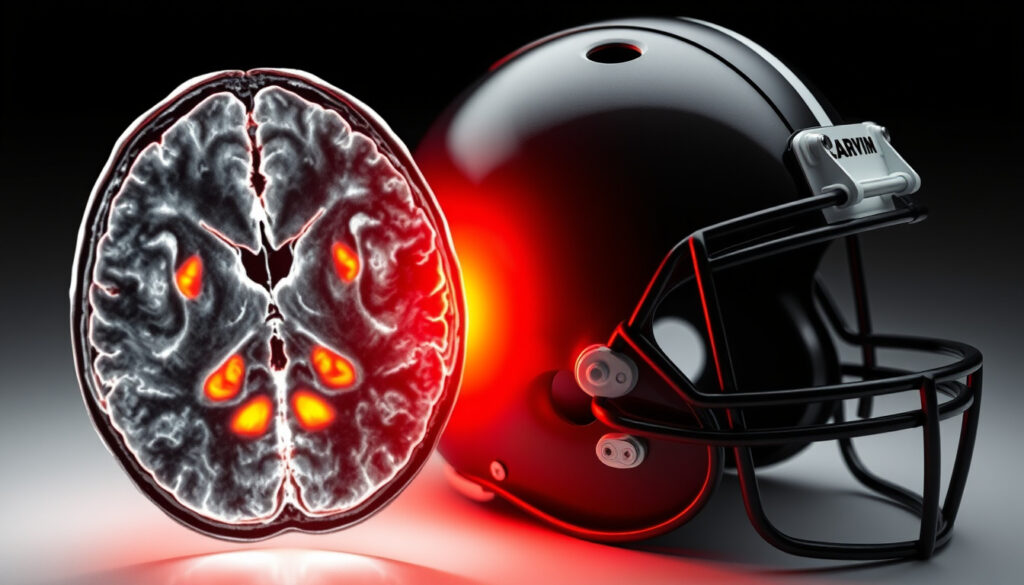
Wally Lewis CTE Diagnosis: What We Know About His Brain Condition
For decades Wally Lewis was the face of Queensland’s State of Origin dominance – the man they called ‘The King’. Now at 64, he’s facing a different opponent: a degenerative brain condition linked to the sport that made him a legend.
Current age: 64 (born 1 Dec 1959) ·
Diagnosis: Probable CTE & epilepsy ·
Career highlight: 4 State of Origin series wins as captain ·
Hall of Fame: Sport Australia Hall of Fame 1987 ·
Married: Lynda Adams (2023)
Quick snapshot
- Diagnosed with probable CTE in April 2023 (Australian Seniors)
- Also suffers from epilepsy (The Conversation)
- Played 33 State of Origin matches for Queensland (ABC News)
- Never won a club grand final (ESPN)
- CTE diagnosis definitive only after death (Australian Seniors)
- Exact nature of family rift over 2023 wedding – reported but not confirmed (ABC Radio Brisbane)
- Full extent of cognitive decline remains private (Australian Seniors)
- Whether scans moving his doctor to tears is an independently verified account (Australian Seniors)
- 2021 – Diagnosed with probable CTE (Australian Seniors)
- 31 Jul 2023 – Publicly revealed diagnosis (ABC News)
- 2023 – Married Lynda Adams and published advocacy piece (Australian Seniors)
- Continued advocacy for CTE awareness (Dementia Australia)
- Ongoing neurological monitoring (Dementia Australia)
- Possible campaign for better concussion protocols in NRL (Dementia Australia)
Eight facts that define Wally Lewis, from his playing days to his current health status.
| Attribute | Detail |
|---|---|
| Full name | Walter James Lewis AM |
| Born | 1 December 1959, Hawthorne, Queensland |
| Nickname | The King |
| Position | Five-eighth / Lock |
| Height | 183 cm (6 ft 0 in) |
| Clinical diagnosis | Probable CTE and epilepsy |
| Marital status | Married to Lynda Adams (since 2023) |
| Net worth (est.) | A$2 million |
What is Wally Lewis’ diagnosis?
In April 2023, Lewis was diagnosed with probable chronic traumatic encephalopathy (CTE), a degenerative brain condition caused by repeated head trauma. He also lives with epilepsy, which first became public after he suffered two seizures during a live TV broadcast in 2006.
CTE cannot be cured, and definitive diagnosis only happens after death. But Lewis’s case – supported by brain scans that reportedly moved his doctor to tears – is as close as clinicians can get during life.
Symptoms and public disclosure
- Lewis sought medical advice after experiencing regular bouts of memory loss (ESPN)
- His scans revealed changes consistent with CTE (ABC News)
- He revealed the diagnosis on national television on 31 July 2023 (ABC News)
CTE and epilepsy explained
CTE is a form of dementia linked to repeated concussions and sub-concussive hits (Dementia Australia). Epilepsy, a separate neurological disorder, can co‑occur with traumatic brain injury. The connection may involve the same brain regions damaged by head trauma.
The implication: Lewis’s dual diagnosis highlights the accumulated toll of a career spent in the middle of the field, taking and delivering hits.
What’s going on with Wally Lewis?
Since his diagnosis, Lewis has become a prominent advocate for CTE awareness while navigating personal changes, including a 2023 wedding and reported family tension.
Health update and advocacy
- Lewis partnered with Australian Seniors to share his story and urge others to seek help
- Dementia Australia praised his openness for reducing stigma (Dementia Australia)
- He remains active in public life, including media appearances and charity work
“I’m 90% certain I have CTE, and it’s something I’ve got to live with.”
Wally Lewis, via Australian Seniors
Family relationships and wedding
- Lewis married Lynda Adams in 2023
- His son Lincoln did not attend the wedding; media reports suggest a rift (ABC Radio Brisbane)
The pattern: personal cost of CTE extends beyond the individual – relationships and family dynamics often suffer as the disease progresses.
Why are so many sportsmen getting motor neurone disease?
Contact athletes face elevated risk of neurodegenerative diseases. Research increasingly links repeated head trauma to conditions like CTE, motor neurone disease (MND) and ALS.
Link between contact sports and neurodegenerative disease
- Professional rugby players show higher rates of MND than the general population (The Conversation)
- CTE is found post-mortem in many football, rugby and boxing athletes (Dementia Australia)
- Prevention requires minimizing head injuries in sport (Dementia Australia)
Research on athleticism and ALS risk
Studies suggest that repetitive head impacts may trigger a cascade of neurodegeneration. Former NFL players face up to 4 times the risk of ALS compared to non‑athletes. While data on rugby league is still emerging, the pattern is consistent across contact sports.
“The link between repeated head trauma and chronic traumatic encephalopathy is well-established. What we are now seeing is a broader spectrum of neurological damage.”
Neurologist quoted in The Conversation
Why this matters: Wally Lewis’s case is not an isolated tragedy – it’s a warning bell for an entire sport.
Who is the greatest rugby league player ever?
Wally Lewis is routinely placed on the shortlist. His State of Origin performances – where he captained Queensland to four series wins – earned him the nickname ‘The King’.
Wally Lewis’s legacy in rugby league
- 33 State of Origin appearances, 4 series wins as captain (ABC News)
- Inducted into the Sport Australia Hall of Fame in 1987
- Named Rugby League Week’s Player of the Year in 1984
Comparison with other legends
He is often compared to contemporaries such as Mal Meninga and Andrew Johns. While Johns is celebrated for club success and Meninga for longevity, Lewis’s Origin record is unmatched. The debate may never be settled, but his place in the pantheon is secure.
The catch: for all his representative glory, Lewis never won a club premiership – a fact that colours the debate.
Did Wally Lewis ever win a grand final?
No – despite his dominance on the representative stage, Lewis retired without a club grand final victory.
Club career and grand final appearances
- Played for Wynnum Manly, Brisbane Broncos and Gold Coast Chargers (ESPN)
- Reached the NSWRL grand final in 1983 with Wynnum Manly but lost to Parramatta
- Never played in an NRL grand final after the Broncos’ 1992 and 1993 wins
Representative success versus club trophies
His career arc shows a stark contrast: master of State of Origin, bridesmaid in the club competition. The trade-off many fans accept – that his Origin feats outweigh the missing silverware – is part of his legend.
The pattern: greatness does not always come with a premiership ring, and Lewis’s story proves that individual brilliance can define an era regardless of team trophies.
Timeline
Key dates in Wally Lewis’s life
- – Born in Hawthorne, Queensland
- – Professional rugby league career; Queensland captain
- – Inducted into Sport Australia Hall of Fame
- – Diagnosed with probable CTE (Australian Seniors)
- – Publicly revealed diagnosis (ABC News)
- – Married Lynda Adams; published advocacy piece (Australian Seniors)
Clarity check: what we know and don’t know
Separating confirmed facts from ongoing uncertainty helps readers understand the limitations of current knowledge.
Confirmed facts
- Lewis has probable CTE and epilepsy (Australian Seniors, The Conversation)
- He played 33 State of Origin matches (ABC News)
- He never won a club grand final (ESPN)
- He married Lynda Adams in 2023
- He became a CTE awareness advocate (Dementia Australia)
What’s unclear
- Whether CTE diagnosis will be confirmed post-mortem (Australian Seniors)
- Exact nature of family rift over the 2023 wedding
- Full details of his net worth
- Long-term cognitive progression
- Whether reported detail of doctor being moved to tears by scans is independently verified
Quotes: voices on Wally Lewis
“The scans of my brain shocked me. I was 90% certain I had CTE.”
Wally Lewis, speaking to Australian Seniors
“I didn’t go to Dad’s wedding. There are things that happen in families that people don’t understand.”
Lincoln Lewis (son), reported by ABC Radio Brisbane
“Dementia Australia thanks Wally Lewis for his courage in sharing his story and raising awareness.”
Dementia Australia (peak body for dementia care)
For rugby league administrators, the warning from Wally Lewis’s story is unmistakable: ignore the concussion crisis, and more players will pay the price – with their health, their families, and their futures. The choice is clear: invest in prevention now, or face a wave of similar diagnoses in the years ahead.
Similar to the findings in Wally Lewis’s case, Aaron Hernandezs CTE case highlights the long-term neurological risks faced by contact sport athletes.
Frequently asked questions
What is CTE?
Chronic traumatic encephalopathy (CTE) is a degenerative brain disease associated with repeated head injuries. It is a form of dementia that currently can only be definitively diagnosed after death (Dementia Australia).
Can CTE be cured?
No, CTE is incurable. Treatment focuses on managing symptoms and improving quality of life (Australian Seniors).
How does epilepsy relate to CTE?
Epilepsy can occur as a comorbidity with traumatic brain injury. Wally Lewis has both conditions, and his epileptic seizures date back to at least 2006 (The Conversation).
What symptoms does Wally Lewis have?
He has reported memory loss, cognitive decline and epilepsy. His brain scans showed changes consistent with CTE (ABC News).
Has Wally Lewis retired from public life?
No, he remains active in advocacy, media appearances and charity work.
What is the prognosis for someone with CTE?
CTE is progressive and incurable. Symptoms often worsen over time, but the rate varies between individuals (Australian Seniors).
Are there treatments for CTE?
There are no disease-modifying treatments. Management includes cognitive therapy, lifestyle adjustments and medication for symptoms such as epilepsy.
How common is CTE in rugby league players?
Exact prevalence is unknown, but research in contact sports shows elevated risk. Wally Lewis’s case has prompted calls for better concussion monitoring in the NRL (The Conversation).
Related reading: Josh Papalii: Injury, Contract & Career Update · Hazem El Masri: NRL Records, Career, What He’s Doing Now
More related posts
 Daniil Medvedev: Biography, Wife, Putin, Ranking & Career
 Guide Dogs Pet Insurance – Best UK Providers, Costs and Coverage
 Timothy Simons: Biography, Height, Family, and Career
 Greater Western Water: Billing, Direct Debit & Contact Guide
 Brisbane Lions Player Departures – Full List, Reasons and Impacts
 Ginger Spice: The Pop Icon and Kitchen Staple Explained
 Cameron Ciraldo: Bio, Salary, Record & Latest News
 Free Games Online: Best Sites to Play Without Download (2025)
