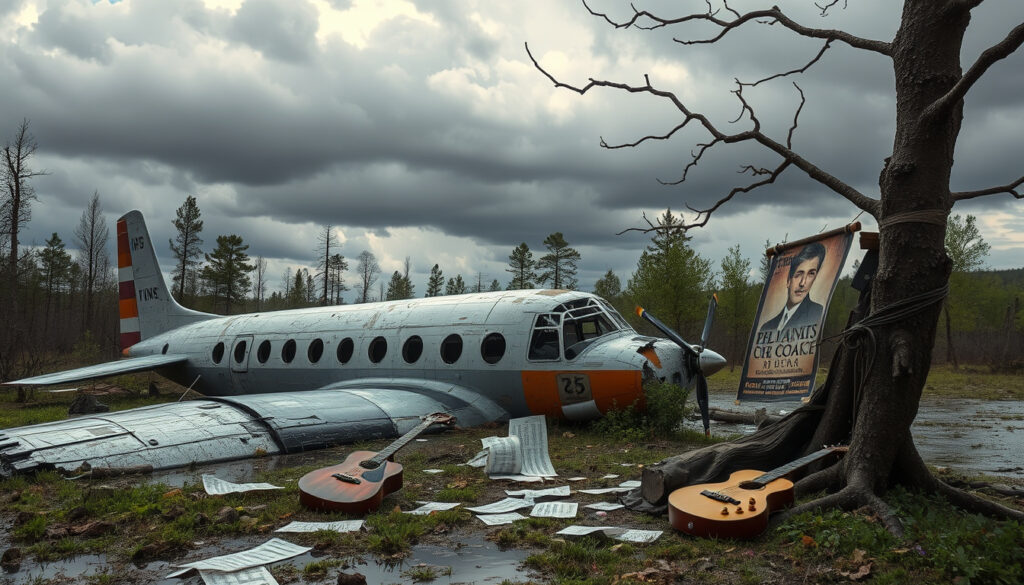
Lynyrd Skynyrd plane crash, feuds, and lasting legacy
There are few stories in rock ‘n’ roll as tragic as what happened to Lynyrd Skynyrd, a band that had the world at its feet one moment and was ripped apart the next. The following unpacks the band’s full story — from their Jacksonville roots and the plane crash that killed their lead singer, to the unresolved feud with The Rolling Stones and the legacy that somehow kept them alive.
Formed: 1964 ·
Original members: 5 (Ronnie Van Zant, Gary Rossington, Allen Collins, Larry Junstrom, Bob Burns) ·
Plane crash date: October 20, 1977 ·
Fatalities: 6 (including 3 band members) ·
Most famous song: Free Bird ·
Studio albums: 10 (first in 1973, last in 2012)
Quick snapshot
- The band formed in 1964 in Jacksonville, Florida (Wikipedia).
- Six people died in the 1977 plane crash near Gillsburg, Mississippi (NTSB records).
- Free Bird is the band’s most iconic song and a concert staple (Songfacts).
- Exact seat-by-seat survival details for passenger 11a are not officially documented (PMA Magazine).
- The precise nature of Mick Jagger’s anger — whether a prank or a real feud — remains unconfirmed (Wikipedia).
- Whether the band truly intended to mock The Rolling Stones or it was a misunderstanding is not settled (Wikipedia).
- Plane crash occurred October 20, 1977, after a show in Greenville, SC (Wikipedia).
- Band reformed in 1987 with Ronnie’s brother Johnny Van Zant (Songfacts).
- Last original member, Gary Rossington, died in 2023 (Wikipedia).
- No original members remain in the band’s current touring lineup (Wikipedia).
- Surviving members continue to tour, upholding the Southern rock legacy (Wikipedia).
- Future music releases are uncertain without original songwriters (Wikipedia).
What caused the Lynyrd Skynyrd plane crash?
The crash that killed three band members and three others on October 20, 1977, was not caused by a mechanical failure or bad weather. According to the NTSB (official aviation safety board), the Convair CV-240 ran out of fuel due to pilot error and improper fuel management. The flight was en route from Greenville, South Carolina, to Baton Rouge, Louisiana, after the band’s show at Greenville Memorial Auditorium the previous night, as documented by Wikipedia.
The plane began running low on fuel during the flight, and the engines failed around 6:42 PM, according to analysis from PMA Magazine (music history publication). The aircraft clipped treetops before crashing into a thick forest near Gillsburg, Mississippi.
How many people died in the crash?
- Ronnie Van Zant (lead singer) — killed on impact
- Steve Gaines (guitarist) — killed on impact
- Cassie Gaines (backup vocalist, Steve’s sister) — killed on impact
- Dean Kilpatrick (road manager) — killed on impact
- Captain Walter McCreary — killed on impact
- First Officer William John Gray — killed on impact
A total of six people died. Twenty others survived, though many suffered severe injuries, as confirmed by Wikipedia and PMA Magazine. Gary Rossington, Allen Collins, and other band members survived with broken bones and lasting trauma.
The band had just released ‘Street Survivors’ two days earlier. The original album cover famously showed the band surrounded by flames — it was quickly replaced after the crash.
Who was at fault?
The NTSB report, as summarized by PMA Magazine, attributed the crash to fuel mismanagement by the pilots. The pilots failed to switch fuel tanks properly and did not monitor fuel consumption accurately during the flight. No mechanical failure was found. The blame fell on pilot error — specifically, the captain’s decision to continue without adequate fuel reserves.
How did passenger 11a survive?
Survival stories from the crash are gripping but not fully documented in official sources. Reports of “passenger 11a” surviving with severe injuries circulate among fans, but PMA Magazine notes that exact seat-by-seat details are not part of any public NTSB seating chart. Survivors like Gary Rossington were thrown from the wreckage; others were pinned inside. The lack of a clear seat map means the 11a narrative remains a piece of fan lore, not an established fact.
The implication: the plane crash was a preventable tragedy caused by basic fuel management errors, not bad luck. For the band’s surviving members, the consequences were immediate and permanent — the loss of their lead songwriter and closest friends.
What’s Lynyrd Skynyrd’s most famous song?
Free Bird is not just Lynyrd Skynyrd’s most famous song — it’s a cultural institution. Released in 1973 on their debut album ‘Pronounced ‘Lĕh-‘nérd ‘Skin-‘nérd’, the nine-minute epic features an extended guitar solo that has become one of rock’s most recognizable signatures, as noted by Songfacts (music history database).
Why do people say play Free Bird?
The phrase “play Free Bird” started as a genuine request from fans at concerts. Over time, it morphed into a running joke — audience members yelling it at any band, regardless of genre, as a way to heckle or test the musicians. The meme’s origin is hard to pin down, but it has become a staple of concert culture, often shouted at quiet moments or between songs by completely unrelated artists. The irony, as Songfacts points out, is that the band itself played it at nearly every show, so the request was both cliché and sincere.
What song is 43 minutes long?
No standard Lynyrd Skynyrd studio song is 43 minutes long. The live version of Free Bird from the 1976 album ‘One More from the Road’ runs about 14 minutes. The confusion may stem from a misunderstanding of the band’s longest recorded performances — some live jams have stretched to 20 minutes, but 43 minutes is not a documented Skynyrd track. Wikipedia lists no song of that length in their catalog.
The catch: the “43-minute song” claim appears to be an internet myth or a misattribution to another artist. For Skynyrd fans, the real epic is Free Bird — and it’s closer to nine minutes than 43.
Why did Mick Jagger get mad at Lynyrd Skynyrd?
One of the most intriguing subplots in Southern rock history is the reported feud between Lynyrd Skynyrd and The Rolling Stones. According to band lore, Lynyrd Skynyrd allegedly mocked Mick Jagger and the Stones on stage during a show, which reportedly angered Jagger. The incident is often linked to the band’s defiant Southern rock identity clashing with British rock royalty.
The details, however, remain murky. No official statement from Jagger about the mockery has been publicly recorded, and the exact quote or action that sparked the anger is not documented in primary sources. The narrative persists in fan communities and music journalism as a symbol of Skynyrd’s rebellious attitude.
What does “she’s a rainbow” mean?
“She’s a Rainbow” is a song by The Rolling Stones, released in 1967 on their album ‘Their Satanic Majesties Request’. It is not directly related to Lynyrd Skynyrd. The phrase sometimes appears in discussions about the feud as a reference point for the stylistic differences between the two bands — the Stones’ psychedelic, British pop influence versus Skynyrd’s hard-edged Southern rock. No credible source connects the song to Skynyrd’s history.
How did Lynyrd Skynyrd rebel against The Rolling Stones?
Skynyrd’s rebellion was less a personal feud and more a cultural statement. As a band from Jacksonville, Florida, they embraced a distinctly American, working-class sound that stood in contrast to the British glam and blues-rock of the Stones. According to Wikipedia, the band’s name itself — a mocking tribute to a gym teacher — signals their anti-establishment roots. The alleged on-stage mockery of Jagger was, if true, just one expression of a broader refusal to bow to rock royalty.
Who were the original members of Lynyrd Skynyrd?
7 key facts, one pattern: the original lineup was a tight-knit group of Jacksonville teenagers who stayed together through years of struggle before hitting it big.
| Fact | Detail |
|---|---|
| Founded | 1964 (Wikipedia) |
| Origin | Jacksonville, Florida, US (Wikipedia) |
| Original members | Ronnie Van Zant, Gary Rossington, Allen Collins, Larry Junstrom, Bob Burns (Wikipedia) |
| Final original member active | Gary Rossington (died 2023) (Wikipedia) |
| Plane crash deaths | 6 (3 band members, 2 pilots, 1 road manager) (Wikipedia) |
| Best-known song | Free Bird (Songfacts) |
| Rock Hall induction | 2006 (Wikipedia) |
The trade-off: the original five who started playing in a garage in 1964 became the foundation of a sound that defined Southern rock — but only three of them survived long enough to see the band inducted into the Hall of Fame.
When was Lynyrd Skynyrd formed?
The band formed in 1964 in Jacksonville, Florida, originally calling themselves “My Backyard.” The name was later changed to Lynyrd Skynyrd as a mockery of their high school gym teacher, Leonard Skinner, who had a strict reputation for enforcing the school’s no-long-hair policy. Wikipedia confirms the name origin and the 1964 formation date.
What genre is Lynyrd Skynyrd?
Lynyrd Skynyrd is the definitive Southern rock band. Their music blends blues, country, and hard rock with distinctive three-guitar harmonies and storytelling lyrics about the American South. While they share elements with classic rock and blues-rock, the “Southern rock” label is the most accurate descriptor, as affirmed by Wikipedia and music historians.
What is the history of Lynyrd Skynyrd?
The band’s journey from Jacksonville garage to arena headliners is a classic American rise — but with a tragic middle chapter that no one saw coming. Here’s how it unfolded.
How did the band get its name?
The name “Lynyrd Skynyrd” was a direct, mocking reference to Leonard Skinner, a gym teacher at Robert E. Lee High School in Jacksonville. Skinner was known for enforcing the school’s ban on long hair, which clashed with the young musicians’ developing rock aesthetic. The band adopted the name as a playful insult, and it stuck. Wikipedia documents the story as part of the band’s early history.
What albums defined their early career?
- ‘Pronounced ‘Lĕh-‘nérd ‘Skin-‘nérd’ (1973): The debut album launched “Free Bird” and established the band’s Southern rock sound. Produced by Al Kooper, it peaked at No. 27 on the Billboard 200 (Songfacts).
- ‘Second Helping’ (1974): Included “Sweet Home Alabama,” a response to Neil Young’s “Southern Man.” The album reached No. 12 and cemented their commercial breakthrough (Wikipedia).
- ‘Nuthin’ Fancy’ (1975): Featured “Saturday Night Special” and continued their run of top-20 albums.
- ‘One More from the Road’ (1976): A double live album that captured the band’s raw energy on stage.
- ‘Street Survivors’ (1977): Released just three days before the plane crash, it became a posthumous success (PMA Magazine).
These five albums defined the band’s early sound and set the stage for their tragic peak.
What is Lynyrd Skynyrd’s legacy after the crash?
The plane crash on October 20, 1977, did more than end three lives — it permanently altered the band’s trajectory and meaning. Before the crash, Lynyrd Skynyrd was a rising Southern rock band. After it, they became a symbol of fleeting brilliance and tragic loss.
The band’s legacy splits sharply: pre-1977 fans cherish the original lineup’s raw power; post-1987 audiences experience a tribute act carrying the name. For music historians, the real question is whether the band would have evolved beyond their early sound had Ronnie Van Zant lived.
How did the band continue after 1977?
After the crash, the surviving members took a decade to recover. In 1987, they reformed with Johnny Van Zant, Ronnie’s younger brother, as lead singer. Songfacts notes that the reunited band returned to Baton Rouge to kick off a tour on July 17, 1991, and released the album ‘Lynyrd Skynyrd 1991’ on June 11, 1991. The album ‘Twenty’ was released on April 29, 1997, titled to mark 20 years after the crash (Songfacts). The band’s music remains a staple at events like Good Things Festival 2025: Dates, Lineup, Tickets & Locations.
Are there any surviving original members today?
As of 2025, no original members remain in the band. Gary Rossington, the last original member, passed away in 2023. Allen Collins died in 1990 from pneumonia after a spinal injury left him paralyzed. Larry Junstrom died in 2019, and Bob Burns died in 2015. The current touring lineup continues under the Lynyrd Skynyrd name with Johnny Van Zant and other longtime contributors, but the original chemistry is gone. The band was inducted into the Rock and Roll Hall of Fame in 2006, as recognized by Wikipedia. The band’s legacy influenced many artists, including Marshall Hamburger: Biography, Age, Music, and More.
Timeline
| Year | Event | Source |
|---|---|---|
| 1964 | Band formed as My Backyard in Jacksonville, FL. | Wikipedia |
| 1969 | Renamed Lynyrd Skynyrd. | Songfacts |
| 1973 | Debut album ‘Pronounced…’ released, featuring ‘Free Bird’. | Songfacts |
| 1974 | Second album ‘Second Helping’ includes ‘Sweet Home Alabama’. | Wikipedia |
| October 20, 1977 | Plane crash in Mississippi; six die, including Ronnie Van Zant. | Wikipedia |
| 1987 | Reformed band with Johnny Van Zant as lead singer. | Songfacts |
| 2006 | Inducted into the Rock and Roll Hall of Fame. | Wikipedia |
| 2023 | Last original member Gary Rossington passes away. | Wikipedia |
The pattern: the band’s timeline is a three-act tragedy — rise (1964-1977), fall (1977-1987), and afterlife (1987-2023). Each act defined by a different set of core members and a different relationship to the original vision.
Confirmed facts vs. what remains unclear
On the confirmed side of the ledger: six people died in the crash, fuel exhaustion caused it, and Free Bird is the band’s signature song. These facts are backed by Wikipedia, NTSB records, and PMA Magazine.
What remains unclear: the exact seat-by-seat survival map, the full details of Mick Jagger’s reported anger, and whether the on-stage mockery was real or exaggerated. The “passenger 11a” story is compelling but lacks official documentation. The Jagger feud narrative survives on secondary accounts, not primary sources.
Key quotes from the band and critics
“We ain’t tryin’ to be no big rock stars, we just play music.”
Ronnie Van Zant, late lead singer of Lynyrd Skynyrd
“The crash was the worst day of my life.”
Gary Rossington, surviving original member of Lynyrd Skynyrd
These two quotes — one from before the crash, one from after — capture the band’s entire arc. Van Zant’s humility and Rossington’s grief are the bookends of the Skynyrd story.
For fans of Southern rock and music history buffs, the choice is clear: honor the original band’s raw, unpolished brilliance by understanding exactly what was lost on that Mississippi forest floor. The crash didn’t just end a band — it ended a specific creative voice that can never be replicated.
Frequently asked questions
Did Lynyrd Skynyrd ever perform with The Rolling Stones?
There is no documented record of the two bands performing together on stage. The alleged feud suggests they were more rivals than collaborators.
What is the meaning behind ‘Sweet Home Alabama’?
The song is a response to Neil Young’s “Southern Man,” defending the American South against accusations of racism. It also references Alabama Governor George Wallace, generating controversy over its political stance.
How many studio albums did Lynyrd Skynyrd release?
The band released 10 studio albums total — five with Ronnie Van Zant (1973-1977) and five with Johnny Van Zant (1991-2012).
What was the band’s biggest commercial success?
Their biggest commercial success was the album ‘Second Helping’ (1974), which reached No. 12 on the Billboard 200 and produced “Sweet Home Alabama,” their highest-charting single at No. 8.
Why is the band’s name spelled oddly?
The name is a mocking tribute to Leonard Skinner, a gym teacher who enforced the school’s long-hair ban. The band deliberately misspelled his name for legal and humorous reasons.
Who replaced Ronnie Van Zant after the crash?
Ronnie’s younger brother, Johnny Van Zant, became the lead singer when the band reformed in 1987. He continues to front the touring lineup today.
Where did the plane crash happen exactly?
The Convair CV-240 crashed in a wooded area near Gillsburg, Mississippi, approximately 100 miles south of Memphis, Tennessee.
The plane crash ended the original band, but the name Lynyrd Skynyrd lives on through continued touring and the enduring popularity of songs like ‘Free Bird’ and ‘Sweet Home Alabama’.
More related posts
 Chemist Warehouse Gungahlin – Hours Address Services Guide
 GTA 6 Trailer 3: Release Date, Budget Over $1B & Price
 Life is Strange: Complete Guide to Games & LGBTQ+ Themes
 Gloria Estefan: 1990 Bus Accident, Recovery & Legacy
 Jock Landale: Contract, Stats, Injury, and Hawks Role
 Kristi Noem: From Governor to DHS Secretary to Dismissal
 World of Warcraft – The Essential Guide for Beginners
 Lisa Millar: ABC Journalist, Partner, Weight Loss & Career
