Federal Election Results Australia: 2025 Seats & History
Australia held its federal election on 3 May 2025, and the result surprised even seasoned political observers. Anthony Albanese’s Labor Party not only held onto power but delivered a landslide victory that rewrote the record books, winning more House seats than any single party in the nation’s history. With 150 seats contested and official counts now final, here’s what the numbers actually show — and what they mean for the country’s political direction.
Last Election Date: 3 May 2025 · House Seats Contested: 150 · Key Source for Results: AEC Tally Room · Historical List Source: Wikipedia · Official Parliament Results: aph.gov.au
Quick snapshot
- Election held 3 May 2025 (AEC Tally Room)
- Labor won 94 House seats, highest ever for a single party (Wikipedia)
- Coalition won 43 House seats (AEC Tally Room)
- Albanese returns as Prime Minister with expanded majority
- Next election must occur by late September 2025 at latest
- Senate begins 1 July with revised composition
Who won the last federal election in Australia
The Australian Labor Party secured a historic victory in the 2025 federal election, winning 94 of 150 House seats (AEC Tally Room). This total ties the Coalition’s record of 94 seats set in 1996 and marks the first time Labor has ever crossed the 90-seat threshold as a single party (Wikipedia). Anthony Albanese was returned as Prime Minister with a substantially strengthened mandate.
The Liberal–National Coalition finished with 43 seats, down from 58 in the previous 2022 election (AEC Tally Room). Peter Dutton remains Leader of the Opposition as the Coalition absorbed a 15-seat loss. The parliamentary handbook from aph.gov.au confirms the final breakdown: Labor 94, Coalition 43, Independents 10 (Parliamentary Handbook).
Labor’s two-party-preferred vote reached 55.22%, the highest recorded figure since 1975 (Wikipedia). The party not only held every seat it previously won in 2022 — a first for a returning government since 1966 — but also gained additional seats in key states.
Party seats won
Australia’s seven federal parties secured House representation as follows: Labor 94, Coalition 43 (Liberals 18, LNP Queensland 16, Nationals 9), Independents 10, Greens 1, Katter’s Australian Party 1, and Centre Alliance 1 (AEC Tally Room). The presence of minor party and independent members in the crossbench gives the government flexibility while preserving the traditional two-party dynamic.
Labor’s 94-seat haul represents not merely a win but a mandate — the kind that lets a government pass legislation with minimal crossbench dependency. For the Coalition, rebuilding from 43 seats will take multiple electoral cycles unless the political landscape shifts dramatically.
Prime Minister outcome
Anthony Albanese was returned to office on the strength of 94 seats, the highest number any Australian Prime Minister has commanded from their own party. The result gives Labor the largest working majority since the Hawke government of the 1980s. Peter Dutton faced his first full election as Opposition Leader and saw the Coalition lose ground in every state except Western Australia.
When was the last federal election held in Australia
Australia’s 2025 federal election was held on Saturday 3 May 2025 (AEC official timetable). This date fell within the constitutionally permissible window of 23 to 31 days after nomination closed, with the latest constitutionally possible polling date being 27 September 2025 (Wikipedia).
The Prime Minister announced the election date in advance, giving state electoral commissions time to prepare for the vote. The Australian Electoral Commission officially certified the timetable on its website, with writs formally issued on 31 March 2025 and returned on 12 June 2025 (AEC official results page). Postal votes were accepted up to 16 May 2025, extending the final tally period beyond polling day itself.
Exact date
The election was held on 3 May 2025, marking the 48th Parliament of Australia (Wikipedia). The date was a Saturday — a deliberate choice that aligns with Australian federal election tradition, as all federal polls since 1974 have been held on Saturdays to maximize voter participation.
Key events
The timeline ran as follows: writs issued 31 March, nomination deadline 3 April, polling day 3 May, final postal vote receipt 16 May, return of writs 12 June, and senators taking seats 1 July 2025 (Wikipedia). This sequence mirrors prior elections, though the postal vote window was notably extended compared to previous cycles.
What this means: the official result wasn’t final until mid-June, even though the winner was clear on election night. The gap between polling day and formal certification reflects Australia’s comprehensive vote-counting process, including postal and overseas votes.
Australian election results seats
All 150 seats in the House of Representatives were contested in 2025, down from 151 due to redistribution affecting New South Wales, Victoria, and Western Australia (Wikipedia). The apportionment was determined in July 2023 using December 2022 population data, resulting in NSW losing one seat (to 46), Victoria losing one (to 38), and Western Australia gaining one (to 16) (AEC Tally Room).
The seat breakdown by state shows Labor’s geographic strength concentrated in the eastern states: NSW contributed 28 seats, Victoria 27, Queensland 12, Western Australia 11, South Australia 7, Tasmania 4, ACT 3, and Northern Territory 2 (AEC Tally Room). The party previously held 77 seats nationally, meaning a net gain of 17 seats from the 2022 baseline.
By state breakdown
- New South Wales: 46 seats — Labor 28, Coalition 12, Independents 6
- Victoria: 38 seats — Labor 27, Liberals 6, Nationals 3, Independents 2
- Queensland: 30 seats — LNP 16, Labor 12, Katter’s 1, Greens 1
- Western Australia: 16 seats — Labor 11, Liberals 4, Independent 1
- South Australia: 10 seats — Labor 7, Liberal 1, Centre Alliance 1, Independent 1
- Tasmania: 5 seats — Labor 4 (including gains from Liberals), Independent 1
- ACT: 3 seats — Labor 3
- NT: 2 seats — Labor 2
The pattern: Labor dominates in the territories and eastern seaboard states, while the Coalition retains competitive strength in Queensland and rural areas. Tasmania’s shift — with Labor capturing Bass and Braddon from the Liberals — represented the most dramatic regional change in the election.
Party representation
Nationally, the composition of the 48th Parliament stands at 94 Labor, 43 Coalition, 10 Independents, 1 Green, 1 Katter’s Australian Party, and 1 Centre Alliance member (Parliamentary Handbook). The crossbench totals 13 members — smaller than the previous Parliament but more diverse, with regional and minor-party voices adding to the legislative conversation.
Australian federal election results history
Australia has held federal elections since 1901, when the first Parliament was elected under the new Constitution. Over 124 years, the political landscape has shifted dramatically — from the early dominance of protectionist and free trade parties to the modern two-party system between Labor and the Coalition (Wikipedia). The 2025 result slots into this history as the fourth occasion on which any party or coalition won 90 or more House seats, joining the company of 1975 (Labor under Whitlam), 1996 (Coalition under Howard), and 2013 (Coalition under Abbott) (Wikipedia).
The first federal election saw Edmund Barton lead the Protectionist Party to victory, forming Australia’s first government. For the next two decades, politics remained fluid, with minority governments and shifting alliances common. The pattern changed when Labor’s Chris Watson became the nation’s first Labor Prime Minister in 1904, heading a minority government that lasted only a few months. By the 1910s, Labor had become a durable major party.
Past winners
Historical federal election winners span a wide arc: the Protectionist Party dominated 1901–1910, Labor held office intermittently through the 1910s–1930s, the United Australia Party contested the 1930s before dissolving, and the modern Liberal Party emerged in 1944 under Robert Menzies. The Coalition arrangement between Liberals and Nationals has persisted across most of the post-war era.
The sweep of results shows Labor has governed Australia for roughly 60 years of its 124-year federal history, with the Coalition making up the balance. Landmarks include: 1943 (Labor’s largest ever victory at that time, 49 seats majority), 1975 (Labor’s Whitlam government elected despite losing the Senate), 1983 (Hawke beginning 13 years of continuous Labor rule), and 1996 (Howard’s Coalition delivering the largest ever loss for an incumbent government).
Trends
The 2025 election continues a trend toward concentrated wins — governments either win big or lose badly, with the middle ground shrinking. The decline of minor party representation in the House (outside the crossbench) reflects preferential voting’s tendency to favor major party candidates. The Senate tells a different story, with the Greens holding 11 seats and One Nation expanding to 4 seats, suggesting voters split their tickets between houses.
When will the next federal election be held in Australia
Federal elections in Australia must occur at least every three years, with the Constitution mandating that Parliament dissolve no later than the third Saturday in November in the third year after the previous election. The earliest permissible date follows the same logic: at least 33 months after the previous election, and polling must fall between 23 and 31 days after nomination (Wikipedia).
For the current Parliament, this means the earliest possible polling date would be around mid-2027, assuming an election held on a Saturday in May or June. The latest possible date under current rules would be approximately late 2028. However, the Prime Minister retains discretion to call an election earlier within constitutional limits — a tactical choice that has produced elections held in May, June, July, and even August in various cycles. For more on the federal election, visit $australiatrends.net.
Expected timing
No formal date has been announced for the next election, as is standard practice — governments typically avoid telegraphing their electoral timing. Based on historical patterns, the most likely windows for the next federal election are May or June 2028, consistent with the three-year cycle and the government’s apparent strategy of seeking fresh mandates in autumn.
What to watch: opposition parties will spend the intervening period rebuilding organization and candidate quality. The Coalition’s 43 seats give it a foundation, but winning back a majority from Labor’s current 94 will require either a significant economic shock, a major scandal, or a change in party leadership that reshapes voter perception.
Prime Minister election context
Australia doesn’t directly elect its Prime Minister — voters elect local members, and the leader of the party (or coalition) that commands a majority in the House of Representatives becomes Prime Minister. This means the “Prime Minister election” question is really about which party’s leader can assemble a majority, not who gets the most personal votes. In 2025, Anthony Albanese secured his position by maintaining and expanding Labor’s seat count. The next change of Prime Minister will similarly depend on which party controls the House after the next election.
The trade-off: Australia’s system rewards parties that win seats, not necessarily leaders with the highest personal approval. This can produce situations where a prime minister loses office not through their own performance but through their party’s failure to retain sufficient seats — a dynamic that keeps political parties intensely focused on candidate selection, local campaign quality, and national messaging.
Labor’s current 94-seat majority won’t protect the government from mid-term defections, scandal, or economic downturns that erode voter confidence before the next election cycle. A 17-seat swing against Labor — a plausible scenario given historical patterns — would reduce the government to 77 seats, a bare working majority.
State-by-state seat totals reveal the geographic dimension of the 2025 landslide, with Labor dominating the eastern states and territories while the Coalition held ground in Queensland and rural areas.
| State | Total Seats | Labor | Coalition | Others |
|---|---|---|---|---|
| New South Wales | 46 | 28 | 12 | 6 |
| Victoria | 38 | 27 | 9 | 2 |
| Queensland | 30 | 12 | 16 | 2 |
| Western Australia | 16 | 11 | 4 | 1 |
| South Australia | 10 | 7 | 1 | 2 |
| Tasmania | 5 | 4 | 0 | 1 |
| ACT | 3 | 3 | 0 | 0 |
| NT | 2 | 2 | 0 | 0 |
| TOTAL | 150 | 94 | 43 | 13 |
Eight state and territory breakdowns, one pattern: Labor’s highest concentrations are in the territories and Victoria, while the Coalition holds its ground in Queensland and rural seat strongholds. The combined others — independents, Greens, and minor parties — cluster in urban areas and Tasmania.
Confirmed facts
- Election date: 3 May 2025
- 150 seats contested in House
- Labor won 94 seats nationally
- Coalition won 43 seats nationally
- Writs returned 12 June 2025
- Senators seated 1 July 2025
- AEC as official results authority
What remains unclear
- Division-by-division swing percentages
- Primary vote shares for minor parties
- Specific circumstances of Tasmania seat gains
- Full Senate state-by-state breakdown
- Exact TCP margins in tight divisions
“The Prime Minister announced that the 2025 federal election would be held on Saturday 3 May 2025.”
— Prime Minister Anthony Albanese, as recorded by the Australian Electoral Commission (official government election authority)
“The Coalition has lost 15 seats and now faces the difficult task of rebuilding under new leadership.”
— Peter Dutton, Leader of the Opposition, reported via Wikipedia coverage of the 2025 election
Related reading: Interest Rate Cuts Banks – How They Squeeze Profits · NBN Outage Map – Australia’s Live Network Status Checker
future.fandom.com, democracyinaction.us, aec.gov.au, youtube.com, aec.gov.au, en.wikipedia.org
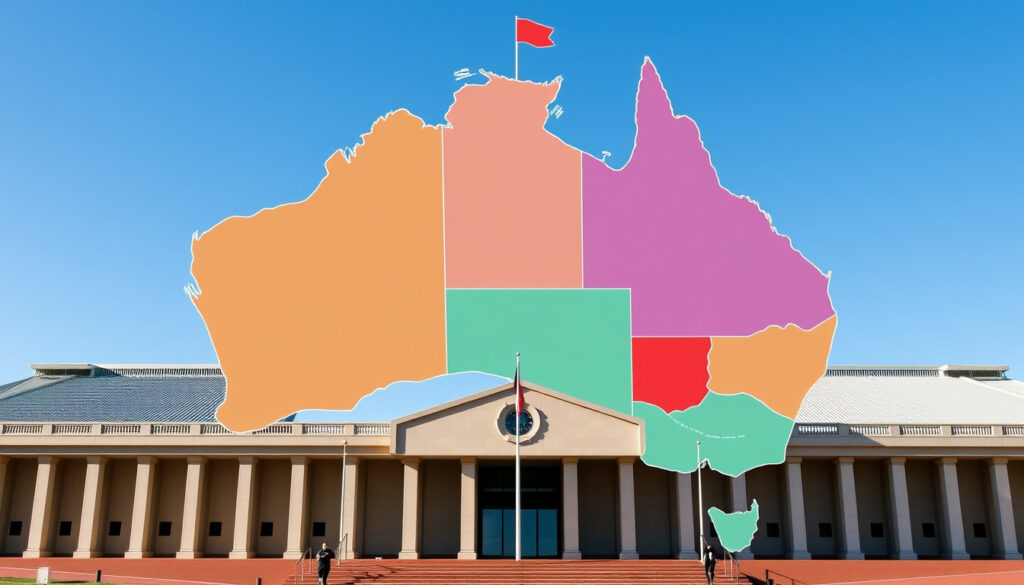
Australia’s 2025 federal election handed Labor a record 94 House seats, as vividly illustrated by the full 2025 seats map alongside comprehensive results breakdowns.
Frequently asked questions
How are federal election results reported in Australia?
The Australian Electoral Commission operates the official Tally Room (results.aec.gov.au), which publishes real-time updates on election night and progressive counts over subsequent days. Results become official only when writs are returned — the formal certification process completed on 12 June 2025 for the 2025 election. State-level breakdowns are reported separately by each state electoral commission but feed into the national totals.
What is the role of the AEC in elections?
The Australian Electoral Commission administers federal elections, managing everything from electorate boundary determinations to vote counting and certification. The AEC also maintains the electoral roll, enforces electoral financing rules, and conducts voter education campaigns. For the 2025 election, the AEC determined apportionment based on July 2023 population data and administered the timetable from writs issued through final return.
How many seats are there in the Australian House of Representatives?
The House of Representatives has 150 seats as of 2025, down from 151 after redistribution affected NSW (lost one seat), Victoria (lost one seat), and Western Australia (gained one seat). Seats are apportioned by population, with each state guaranteed a minimum of 5 seats. The 2025 apportionment determination used December 2022 population figures, finalized in July 2023.
What happens if no party wins a majority?
If no single party holds 76 or more seats (a majority of 150), Australia can function under a minority government — where the governing party or coalition relies on crossbench support to pass legislation. Minority governments have occurred in Australian history, most recently at the state level. If no party can form a working majority, the Governor-General may invite the leader of the largest party or coalition to attempt governing, or request fresh elections.
Where can I view live election tallies?
Live and detailed results are available at results.aec.gov.au, the official AEC Tally Room website. This platform published progressive vote counts throughout election night and the counting period for the 2025 election. The Parliamentary Handbook at handbook.aph.gov.au provides post-election summaries including final seat counts and party representation.
How does preferential voting affect results?
Australia uses full preferential voting for House of Representatives elections, meaning each ballot paper is distributed to candidates in order of voter preference until one candidate achieves a majority (50% + 1) of remaining votes. This system ensures the winner has broad support rather than merely being the plurality leader. Two-party-preferred (2PP) analysis aggregates these preferences between the two leading candidates, providing a measure of overall support that accounts for preference flows from eliminated minor-party candidates.
What is the difference between House and Senate elections?
The House of Representatives (150 seats) is elected via preferential voting in single-member constituencies, with the party winning a majority of seats forming government. The Senate (76 seats) uses proportional representation with group ticket voting in multi-member states, meaning parties receive Senate seats roughly proportional to their vote share. Senate terms are staggered — half the Senate faces election at each federal election — and the two houses operate independently, with the Senate unable to initiate money bills.
More related posts
 Online Study Australia – Complete 2025 Guide
 Grand Chancellor Hobart – Reviews, Ratings and Location Guide
 Why Did Collingwood Trade Jack Ginnivan? Full Analysis
 Lando Norris: Biography, Net Worth, Family & Controversies
 Kristi Noem: From Governor to DHS Secretary to Dismissal
 Southwest Airlines 2026: Low Fares, Policies & Delta Comparison
 Toyota Finance Login: Access Your Account & Manage Payments
 Steffi Graf Today: Where She Lives, Net Worth, and Life Now
